
Desert Island Photobooks
Sustenance.
In The Gift, Lewis Hyde argues that a work of art should be like a gift: it must keep moving. Unlike a commodity, which loses value once consumed, a gift increases through circulation. It creates relationships rather than transactions. I’ve been thinking about this whilst assembling resources for my book on photography pedagogy.1 I had a section called ‘Sustenance’ which listed loads of things that have supported me in my thinking and making. Books and websites, mostly. It grew to unwieldy proportions and needed to be excised from the manuscript. So I’m sharing some of these nuggets here instead. Pass them on, as Hyde would say.
This particular list is inspired by Desert Island Discs and by Stephen Bull’s excellent Desert Island Pics (some of which appear on the Photoworks website), in which photographers choose eight images to take into exile. My version is about photobooks. I’ve chosen nine, claiming one as a luxury item, in the spirit of the radio show’s rules. These are the books I’d want right now, as companions for an enforced period of solitude. Nine is not that many. There are many wonderful books not included. The list is not intended to be balanced, judicious or representative. It’s just a list of things I currently love in no particular order. It might look different tomorrow.
Thomas Boivin: Belleville, Stanley Barker, 2022
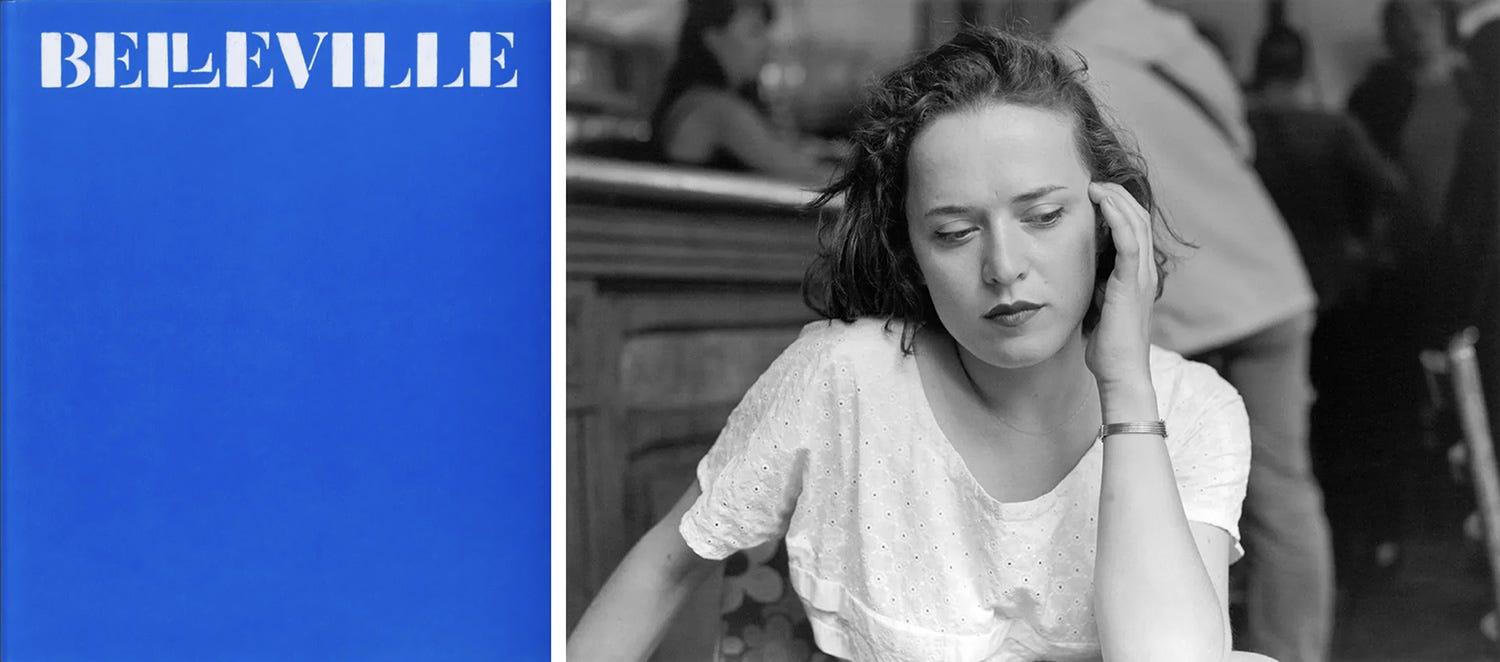
At first glance, Belleville is a modest book. Black-and-white photographs made over many years in a single Paris neighbourhood. But the longer you stay with it, the more it reveals itself as a book about duration rather than place. Boivin accumulates small, unremarkable encounters: mostly gestures, glances and fragments of architecture. The sequencing is open and allusive. I have all of Boivin’s books including, bizarrely, two copies of the portraits made at Place de la République. I saw a wonderful exhibition of his pictures in 2024 at Les Douches la Galerie in Paris. The prints were stunning and Stanley Barker do an excellent job of reproducing them in book form. I love the design, the cover, the feel of the paper. It’s exquisite.
Belleville models a form of photographic patience that is utterly unspectacular. It’s romantic, careful and quiet. Boivin’s frames are beautifully balanced and finely crafted. The pictures manage to be both of their time and timeless. On the island, I’ll have plenty of time to pay careful attention to my surroundings and this would be the book to remind me that photography can be slow and faithful and geographically constrained..
Guido Guidi: Veramente, MACK, 2014
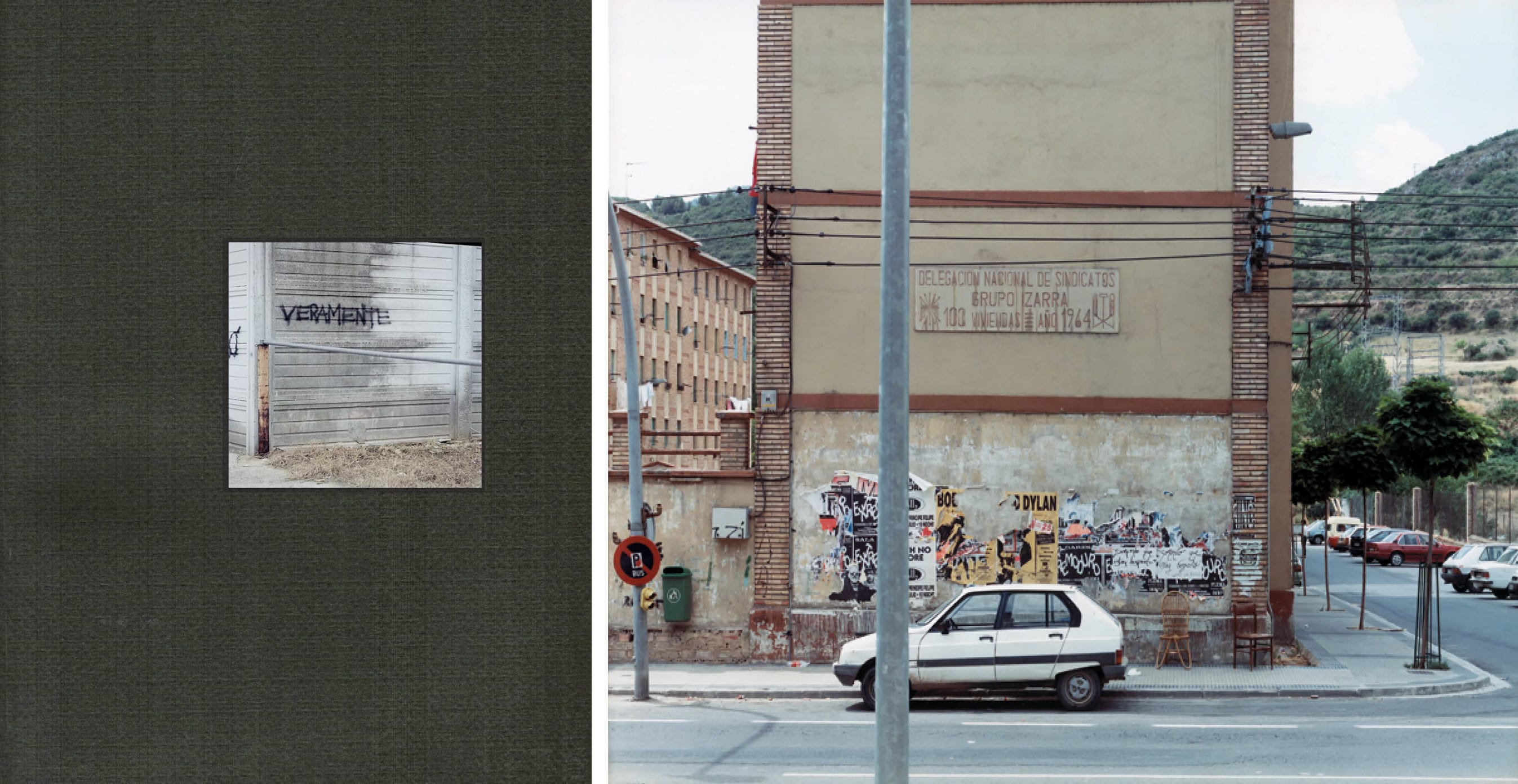
Truly, anyone who knows me or has read my posts here will not be surprised to find Guidi represented. His work asks almost nothing of the viewer except close attention. This 2014 book is the one that introduced me to his photographs of ordinary Italian landscapes: road edges, walls, doorways and weeds. The industrial margins. I’ve got the recent retrospective tome, Col tempo. It’s more complete. But there’s something compelling about a first love. The pictures in Veramente are a sustained meditation on looking without hierarchy. Everything is granted equal dignity. There are no compositional heroics. No climaxes. Instead, you get an ethic of presence. Guidi photographs as if trying to meet the world at eye level. He seems very comfortable with the interstitial, both in terms of the subjects he chooses and his position in the art world, although he’s become something of a hero in recent years.
I travelled to see his exhibition at MAXXI in Rome last year and again in Paris earlier this year. Not many photographers make me plan holidays. This would be my calibration device on the island. A book that quietly insists the world does not need improving before it can be seen.
Nigel Poor: The San Quentin Project, Aperture, 2021
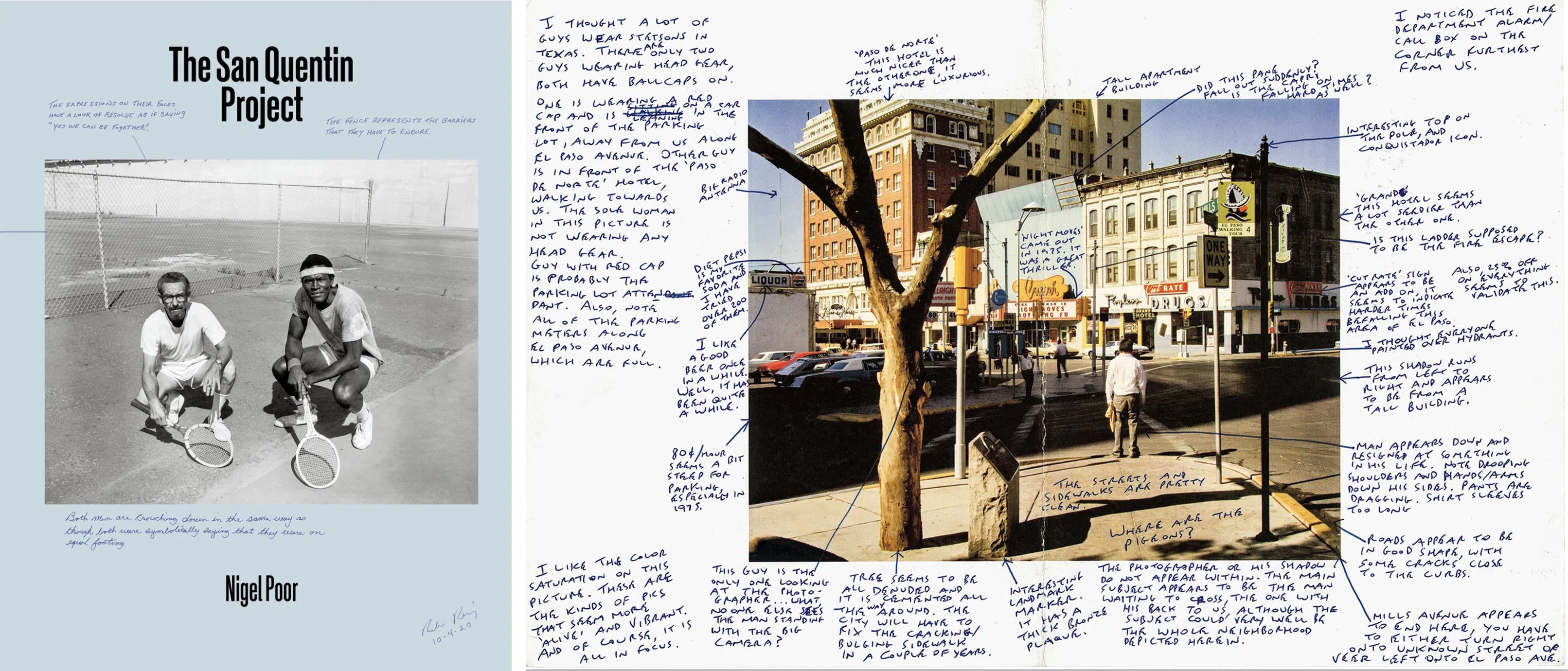
In 2011, Nigel Poor began teaching photography history at San Quentin State Prison. Neither books nor cameras were allowed inside, so she improvised. Students crafted verbal photographs of memories they had no images for. They annotated printouts of canonical work by Eggleston, Shore, Friedlander, their handwriting crowding the margins. Later, Poor gained access to thousands of negatives from the prison’s own archive, made by corrections officers documenting the routines of incarceration. These became the basis for further exercises in looking, remembering and writing.
After the first semester, one student told Poor he could now “see fascination everywhere in San Quentin.” Prison sharpens attention. Survival depends on reading a room, noticing who stands where and when the atmosphere has shifted. Poor’s exercises gave her students permission to apply their attentiveness to photographs and then to themselves. On a desert island, a lesson in constraint and the power of the imagination might be a question of survival.
Rahim Fortune: Hardtack, Loose Joints, 2024
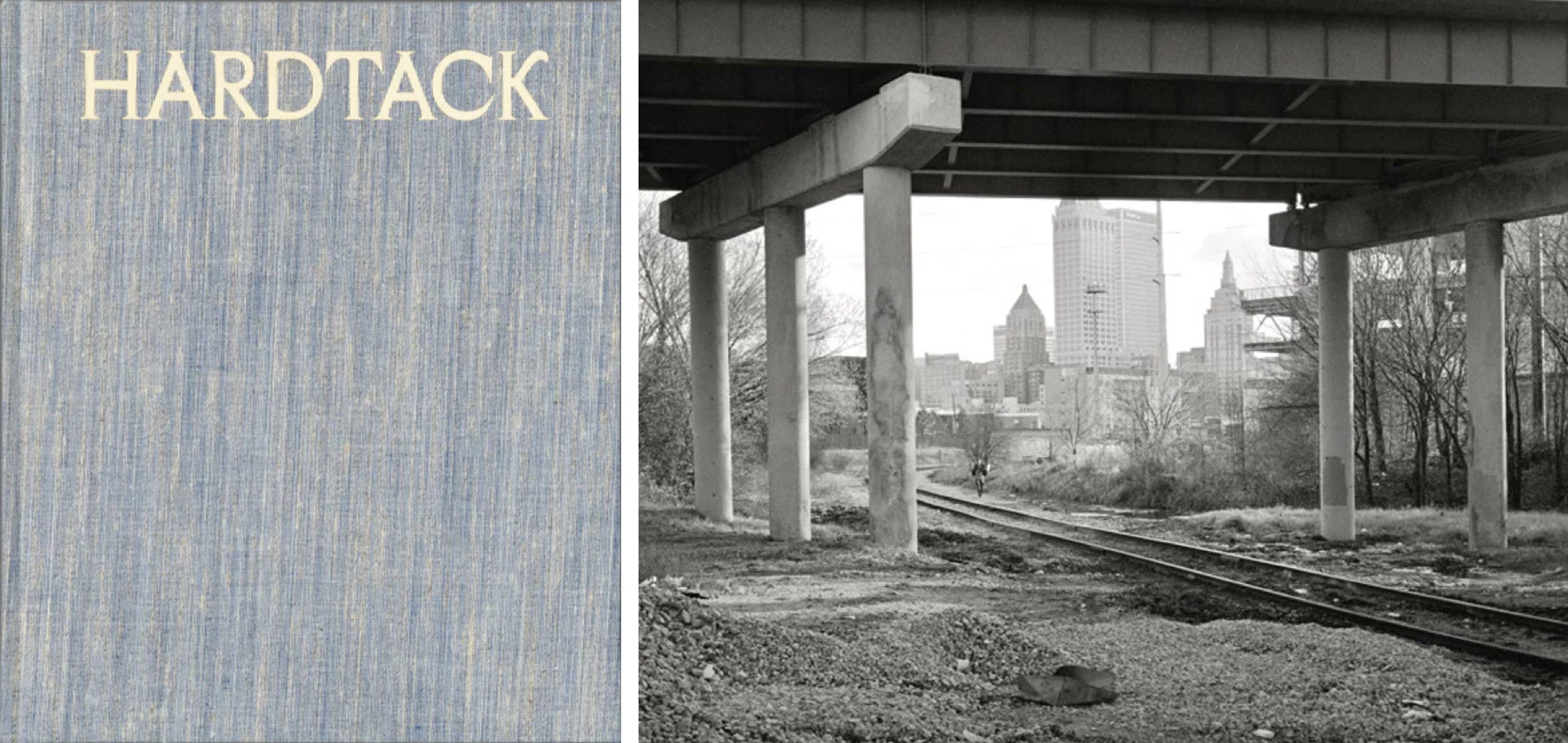
Fortune’s book is grounded in place and lineage. Texan landscapes, Black communities and family histories. The photographs feel fragmentary in a good way, held together by rhythm rather than explanation. He works through atmosphere, gesture and repetition, refusing simplification. Hardtack is made from a combination of flour, water and salt. It’s a food associated with survival and migration. It has an extremely long shelf life.
I lived in Texas for a year in the mid-nineties, just when I started taking photography seriously. I can’t pretend that there isn’t an element of nostalgia in this book choice. But Hardtack demonstrates that photography can carry cultural weight and still be formally adventurous and that a person can survive extreme hardship and retain their dignity.
Jason Fulford: The Heart Is a Sandwich, MACK, 2023
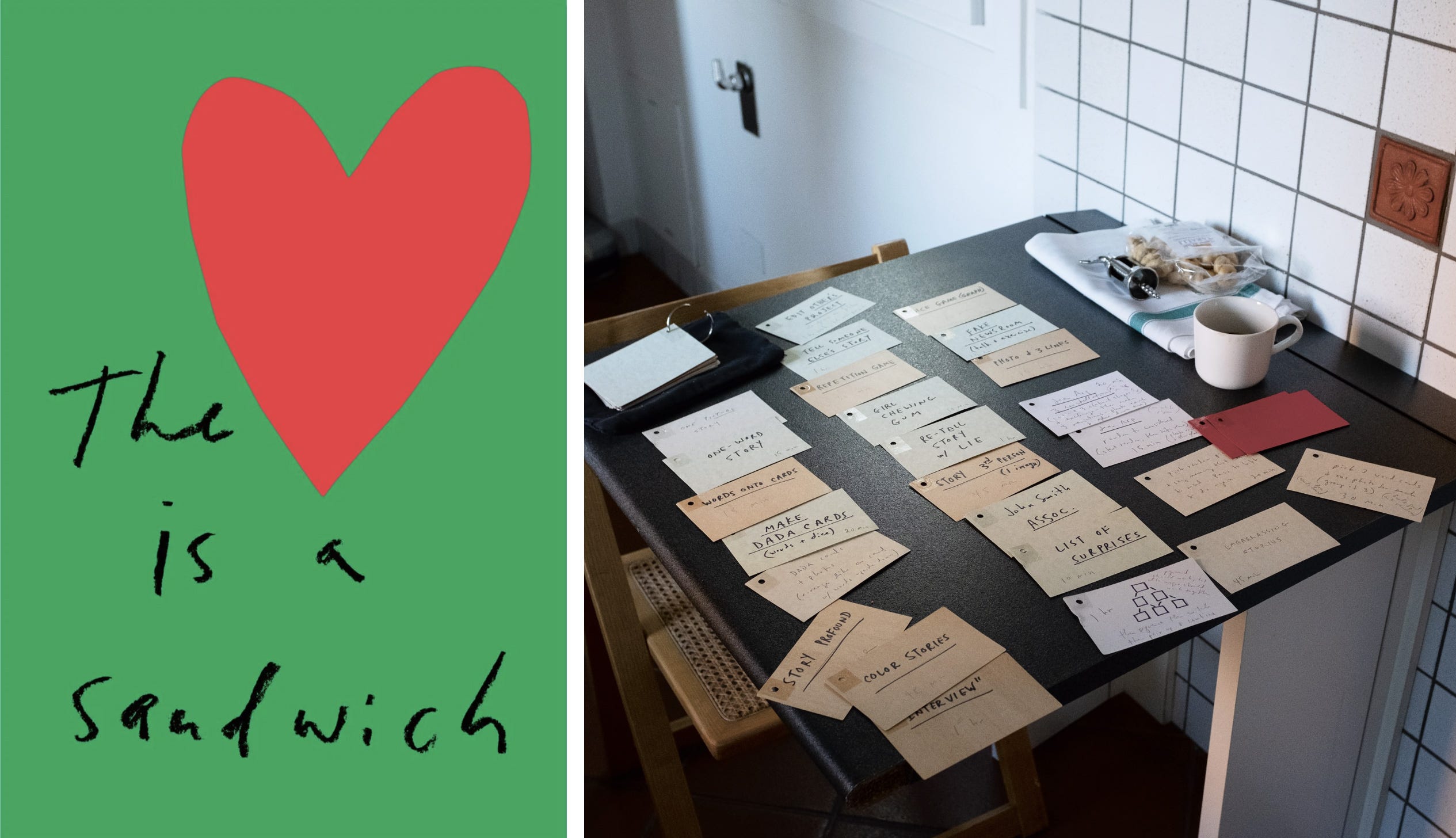
I could have chosen any number of Fulford’s books. I have a few. I’m a big fan. This one really foregrounds the importance of play, structure and sequencing as serious inquiry. Fulford builds visual arguments through juxtaposition, recurrence and surprise. It’s a kind of visual novel in twelve chapters. It reminds me that meaning arises from adjacency. Photographs don’t have to explain themselves individually. They can think together. I’ve long been interested in chance, games and productive misalignment. Fulford operationalises all of that with precision and great wit. I’d also get a second slice of Guidi for dessert!
This would be my reminder that photography can be funny, strange and rigorous at the same time. And I’ll definitely be in need of a sandwich.
Peter Fraser: Two Blue Buckets, Cornerhouse Publications, 1988
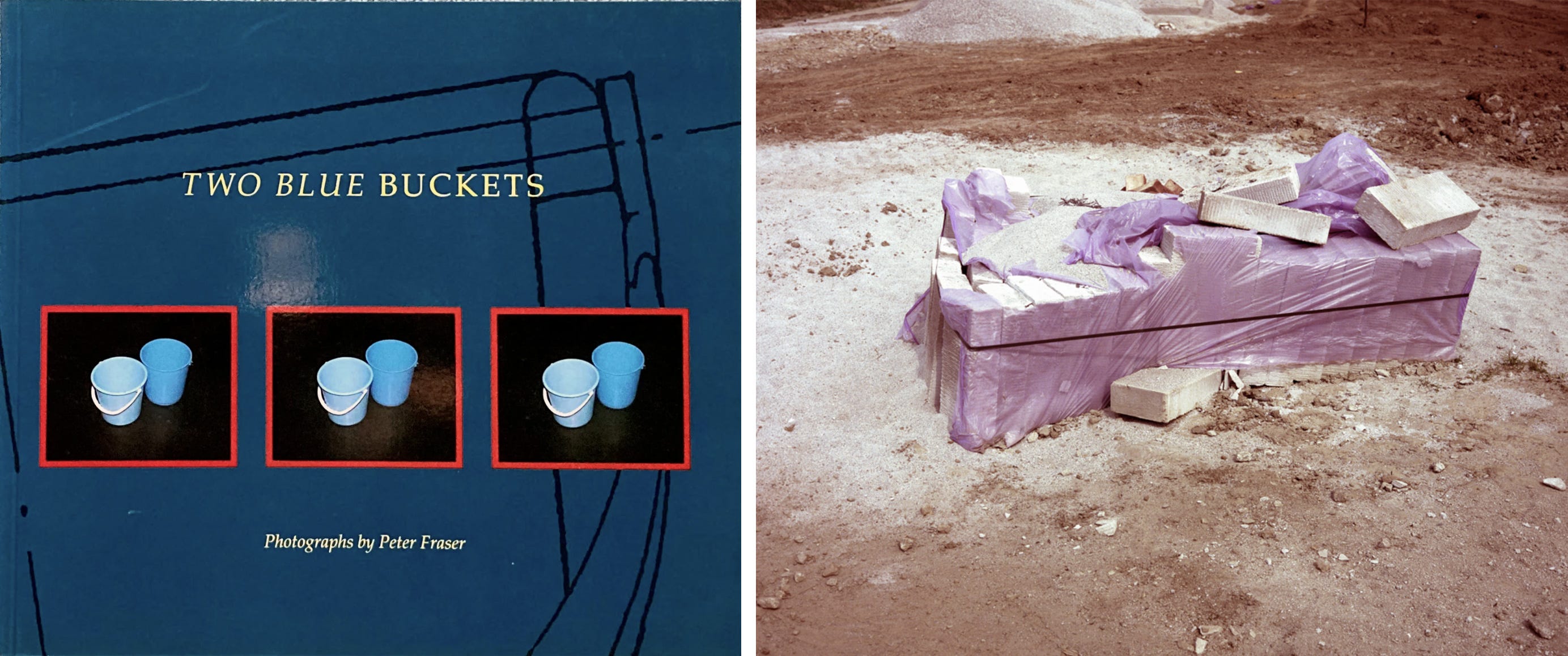
Along with Jem Southam’s magnificent The Raft of Carrots, which sadly I no longer own, this is one of the first serious photography books I bought, from the old Photographers’ Gallery bookshop off St. Martin’s Lane. Fraser photographs ordinary things with a particular intensity. His pictures pose questions. What’s beneath the surface? How does this relate to that? Fraser’s training as an engineer and his interest in the subconscious are the driving forces of his inquisitive, restless search for revelatory meaning in the everyday. The original 1988 edition of Buckets, designed by Alan Ward, remains my preferred version. Its cover features a schematic diagram of the titular buckets, giving the book the appearance of an obscure scientific manual. It’s an exemplary piece of book design.
Buckets prefigured much that followed in British photobook culture but arrived before the language existed to describe it. Fraser’s work sits between art photography, documentary practice and conceptualism. He occupies an unusual and special place in the story of British photography. After all these years, the buckets keep calling to me.
Dafna Talmor: Constructed Landscapes, Fw:Books, 2020
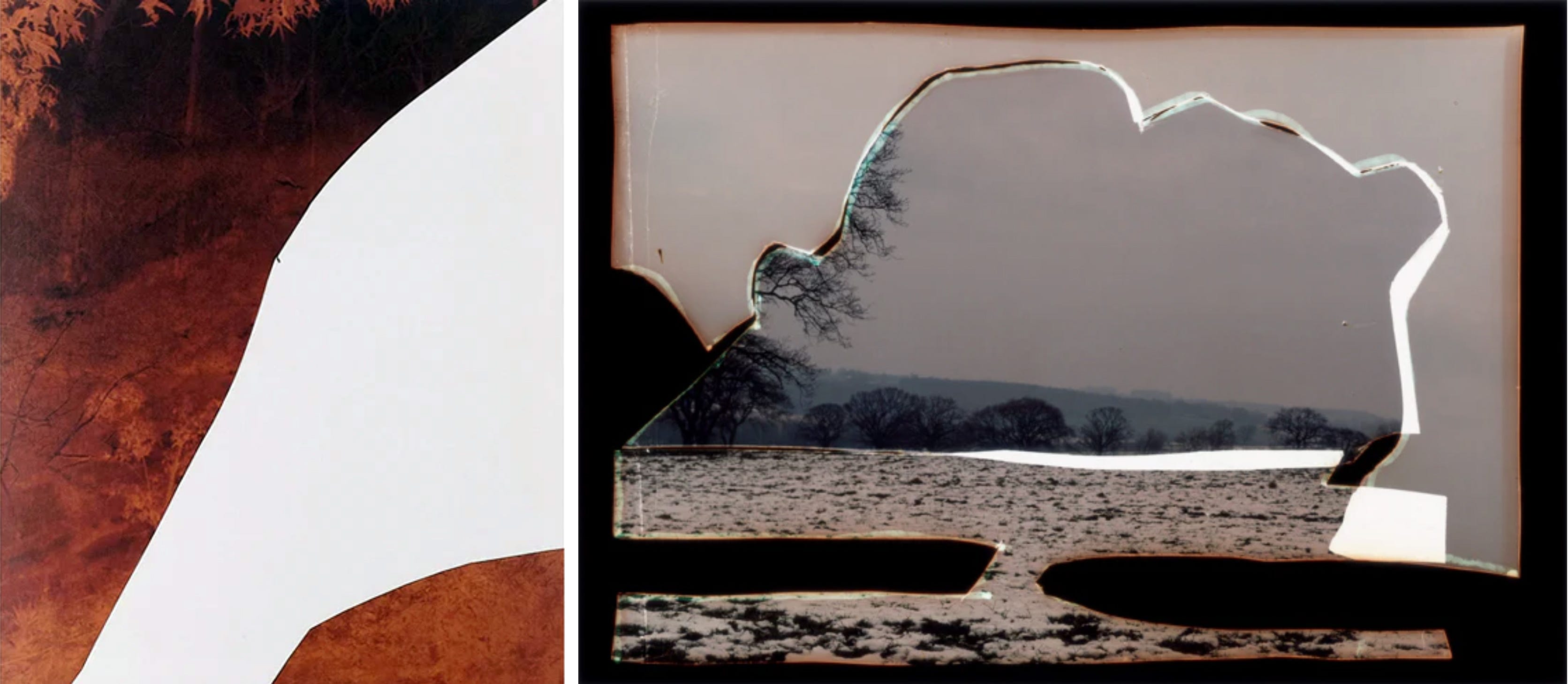
I’ve known Dafna for several years. She’s visited my school and I’ve taken students to her studio. I feel like I know her images really well, but the experience of seeing them on the wall is always breathtaking. This is mainly because she physically reworks photographic prints, cutting and recombining negatives from different locations to make hybrid landscapes. You feel the labour, the care, the precision and the happy accidents in the resulting images. I bought one of her prints for my brother’s 50th birthday. I have a couple of my own. The book, meticulously designed by Hans Gremmen, presents photography as a construction site rather than a window. I remember seeing some of the early works in a small gallery in Margate, long before the book existed. They were the best things in the show by far. I love the way the book honours the process, celebrating what is often hidden: editing, assembling, adjusting, deciding. Photographs are made, not found.
On the island, I hope it might function as a useful reminder that life, like photography, can be re-made.
Tom Lecky: The Archive of Bernard Taylor, Understory Books, 2021
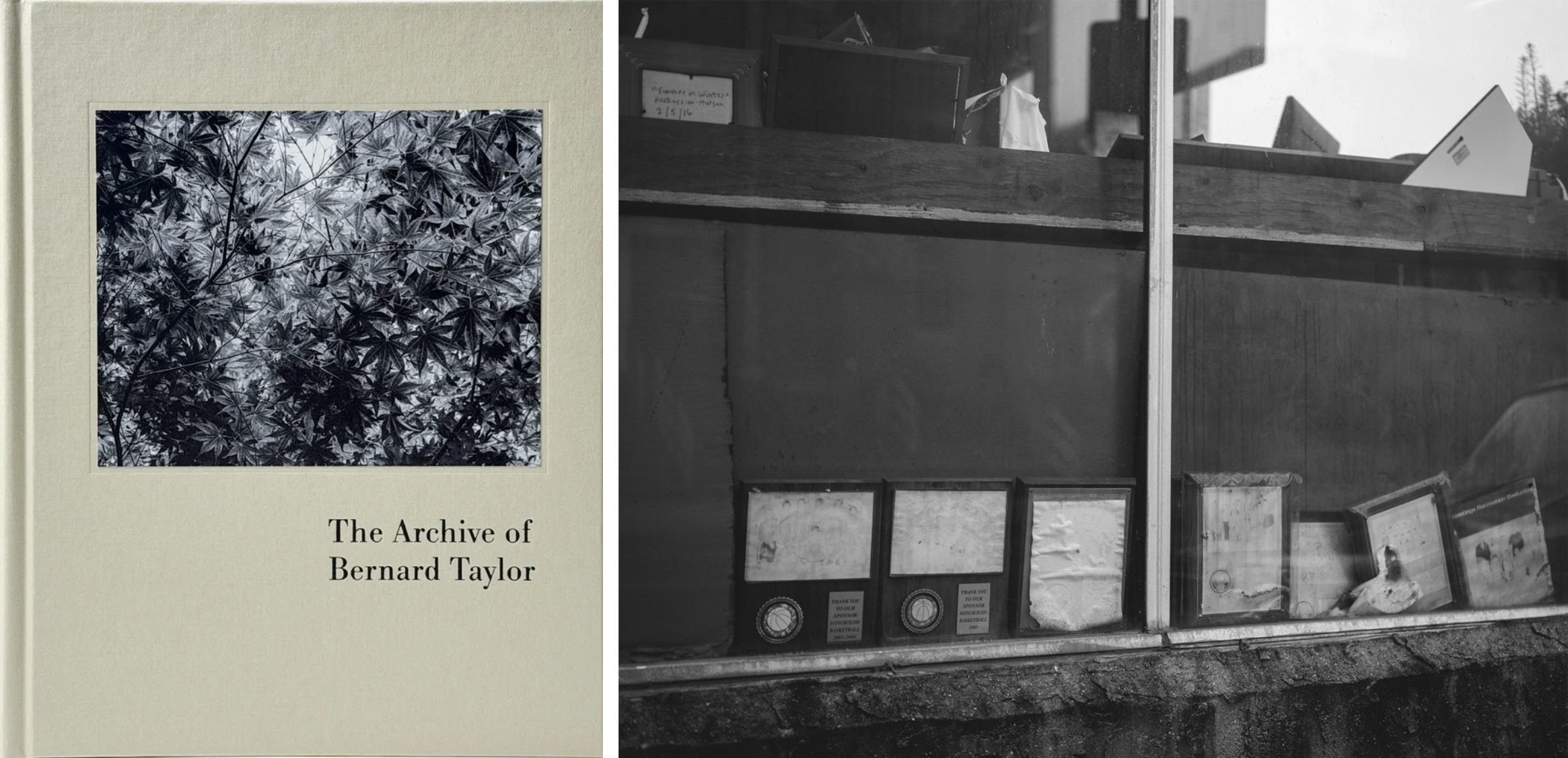
This is a photobook that performs the rhetoric of the archive while quietly pulling the rug from under it. It presents itself as a posthumous recovery of a photographer’s life and work. Spoiler alert! Bernard Taylor may not exist. The photographer could be an invention, the “archive” a constructed apparatus, a plausible fiction in the guise of documentary order.
This is what makes the book so unsettling. It doesn’t lie. Rather, it stages the conditions under which we are willing to believe: boxes, labels, sequencing, historical tone, authoritative texts, associated ephemera and institutional calm. It’s playful and serious. What happens to photographic truth when the frame around the image is fabricated? How easily does authorship become a costume? How much of “photographic evidence” is really a matter of context, typography, paratext, confidence? It employs some Oulipian constraints. It’s cryptic and puzzling and a lot of fun. I may need a fair bit of that on the island.
Giorgio Wolfensberger: Foto Povera, Edition Patrick Frey, 2018 (luxury item)
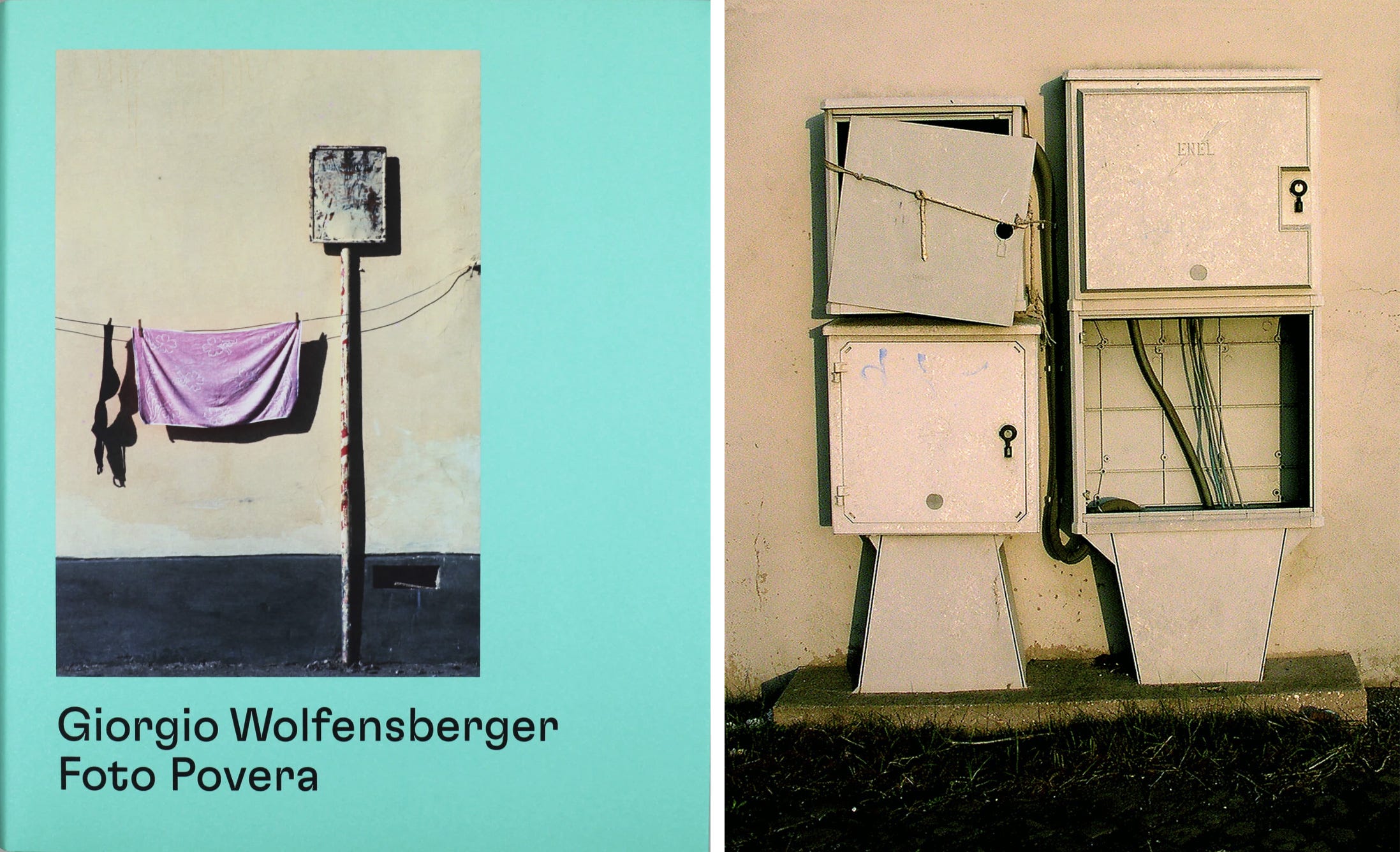
If this were Desert Island Discs, Wolfensberger’s would be my ninth choice. I’m claiming it as my luxury item. It’s a slightly odd selection. Not all the photographs in it interest me equally. For example, I could do without some of the graffiti pictures. And yet it’s a book I’m very fond of. Like a wayward nephew.
Wolfensberger was a Swiss-Italian photographer who spent his working life between Winterthur and Umbria. He was also a filmmaker, an expert on the dancer Suzanne Perrottet, and a photographer of the flora of the Portofino region, assembling a kind of photographic herbarium. The title is perfect. Foto Povera: poor photography, humble photography, photography made from scraps. Urs Stahel, in an accompanying essay, calls his subjects: “An inhabited house. A rutted road. A broken signpost. Glass panes smeared with graffiti. A rickety old mailbox.” The world in use. Trousers in use, as Barthes would say.
What I love is the spirit of it. The simple pleasure of looking and recording. Wolfensberger photographs everything with the same earnestness and gentle humour. His photographic world, like mine, is mostly empty of people but full of evidence of human presence: the marks we leave on surfaces. Stahel calls him “a photographic phenomenologist of everyday life” and writes about him the way one might write about a friend who has died, with affection and precision. “Thank you, Giorgio,” he concludes, “for this dance of things [...] life-affirming in every square inch of its frame, and yet much alive to the mortality of all things.”
Oh, to be remembered like that.
Nine books, a borrowed format, one question. Which photobooks would you take?
These posts will always be free but, if you enjoy reading them, you can support my analogue photography habit, and that of my students, by contributing to the film fund. Thanks to those of you who have already done so. All donations of whatever size are very gratefully received.
I’m pleased to say that the book is nearing completion. It’s being designed by the super talented Cameron Leadbeater. Hoping to have a few copies for sale this summer!
Interesting collection and food for thought.
The anthropologist, Marcel Mauss, (The Gift (1925)) argued that in archaic and non-market societies, exchange of gifts is never truly “free” — it’s governed by the obligation to reciprocate. I think that’s partly true of market societies too. Giving artists some web-time is a good way of paying them back.
A great read as always Jon. And is making me think of visiting my own photo bookshelf as the basis for an article. I love the idea of the difference between commodity and gift. And great to be reminded on two blue buckets, and the raft of carrots. I was fortunate enough to be an undergrad taught by Jem around the Raft of Carrots era, and even had a couple of 121 tutorials with Peter Fraser.