
Six Memos for the Future of Photography
#2: Quickness
This post is part of a short series responding to Italo Calvino’s Six Memos for the Next Millennium.
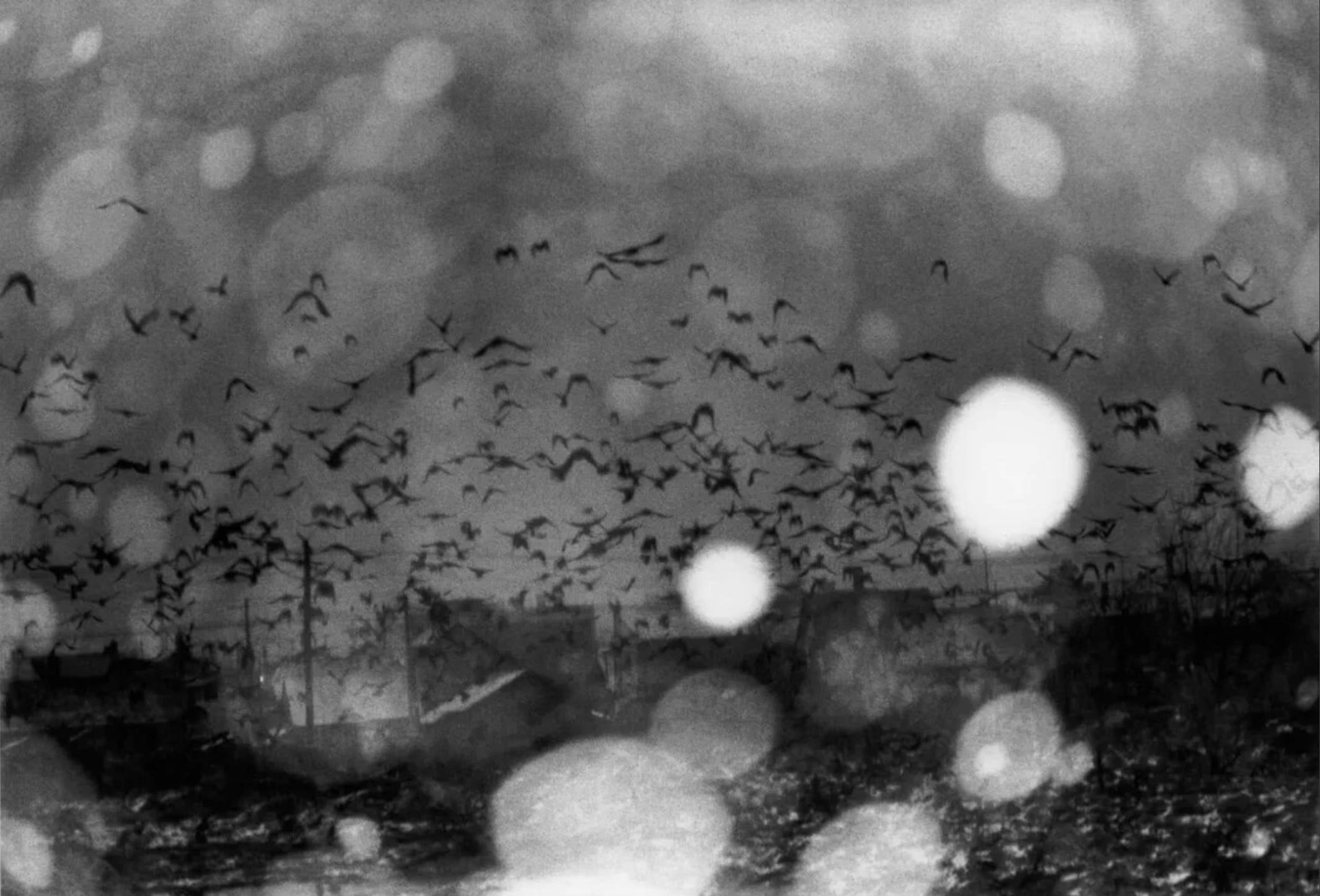
My friend Vaughan gave me a copy of Fukase Masahisa’s Ravens for my sixtieth birthday. A generous and well-chosen present, not only because it was a book I’d wanted for years and never bought for myself. It arrived at the point where I had decided to slow down, taking my pension and stepping back to teaching two days a week. Ravens is a book that rewards a lingering look. Black birds against a pale sky, or looming into the frame, smeared across it as a blur that a faster shutter would have frozen. They’re grainy to the point of abstraction, often barely legible. He made them over roughly a decade, in the years after his marriage ended, meandering through Hokkaido and shooting from train windows. The birds have been read as omens, as the black weather of a mind coming apart. The book feels like a descent. Something worsens as you turn the pages.
Time takes no time
Nothing happens in Ravens. There’s no sequence of events, no plot you could recount to someone who hadn’t seen it. There’s only recurrence, the same black shape repeating, changed a little each time and a thickening mood.
Calvino, in his lecture on quickness, admires the folk tale for its economy. A king falls ill, an ogre’s feather is needed. A loyal servant sets out on a quest. Nobody explains the illness, or why an ogre should have healing feathers. The teller leaves the inessential out and the listener fills the gaps. The pace is achieved through omission. He quotes a formula used by Sicilian storytellers when they want to leap across months or years: “time takes no time in a story.”
A photograph is that economy taken to its limit. It leaves almost everything out. Everything outside the frame and everything before and after the instant. The movement, the sound and whatever duration the thing had, gone. What remains is a single laconic statement that the viewer has to expand back into a world. If time takes no time in a story, it takes no time at all in a photograph, because there is no time left inside it, only the sliver the shutter kept.
In Ravens, Fukase gives us a run of these slivers, each holding almost nothing. We read it like a folk tale. We fill in the gaps. What we pour in is grief and the shape of a failed marriage. The story is ours. We supply it at speed, because that is what a sequence of suggestive pictures provokes. We mistake our own filling-in for something the book is telling us.
I don’t think photographs tell stories. They are too indeterminate for that. Narrativity is a quality they borrow from language. The story is supplied by the reader’s imagination.
Alec Soth has a lovely way of drawing the distinction, in his talk about real vs. story time. Story time, he argues, is what happens when we build a narrative across a set of images, the man mowing his lawn and the meal that seems to follow him, connections we invent and can’t justify. Real time is the time of simply looking. Two frames close together, the eye flickering between them, catching the small change, the tilt of a head, the crescent of light that has moved. Real time expands a moment sideways into attention. Story time runs off ahead of the pictures and builds something they never held.
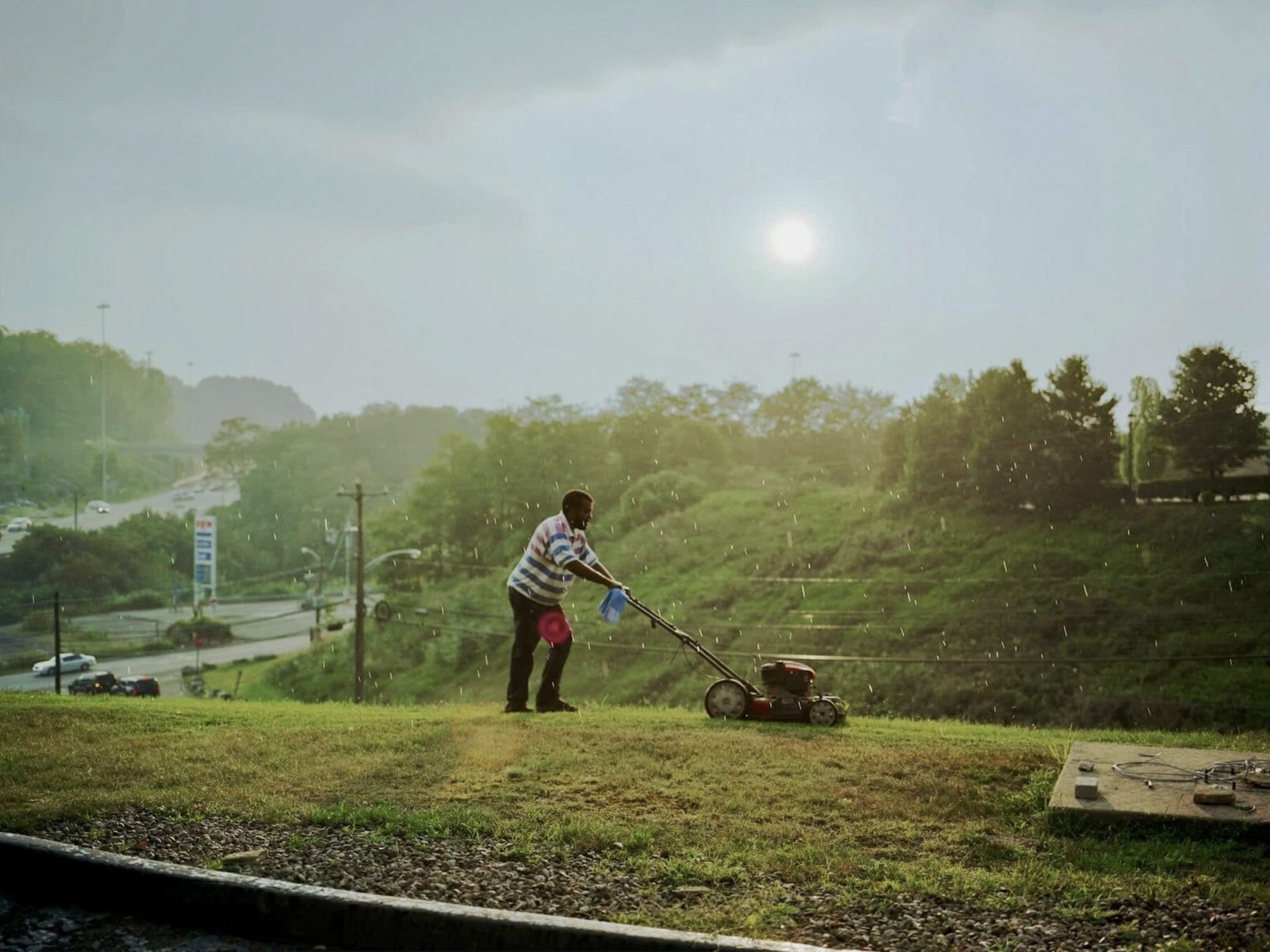
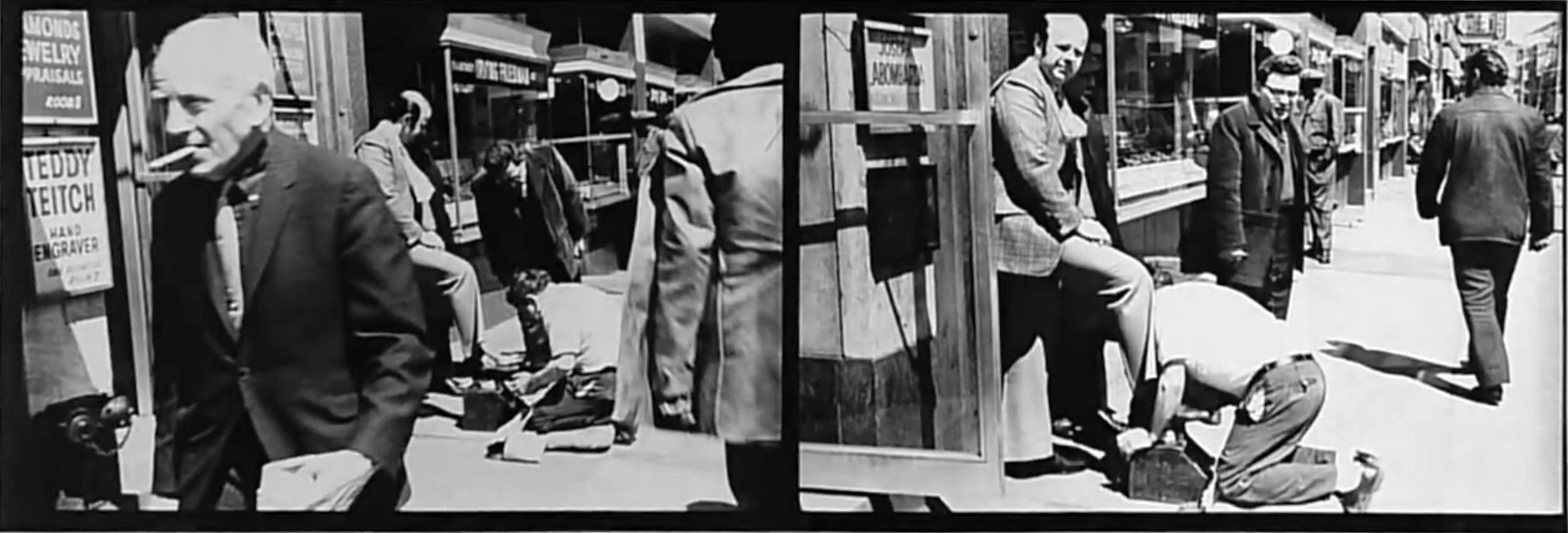
The flicker is quick. Your eye jumps between the frames, holds the first in memory while it reads the second, and in that jump it does what Calvino’s listener does between two spare sentences. It supplies the connection. So the quickness that matters in photography was never the shutter’s. The shutter is merely fast and getting faster. The quickness is the viewer’s; the eye’s acuity.
And it’s true of Ravens too. To read these sequences you have to be quick and slow at the same time. Quick enough to catch the difference between one frame and the next, alert, alive to the smallest change. Slow enough to stay, to allow the flicker to become a gaze. The two pull against each other. Alertness wants to move on. Patience wants to settle.
The trigger
If Fukase shows narrative pressure at its most intense and then withholds the story, there are photographs of birds that never felt the pressure at all. They work in a different register entirely.
For example, consider Étienne-Jules Marey and his photographic gun. In 1882 this French physiologist wanted to study birds in flight and could not do it with the stationary cameras Muybridge had lined up along the track for his galloping horse. So he built a gun. You raised it to your shoulder, tracked the bird across the sky, pulled the trigger, and it took twelve exposures in a second on a rotating plate.

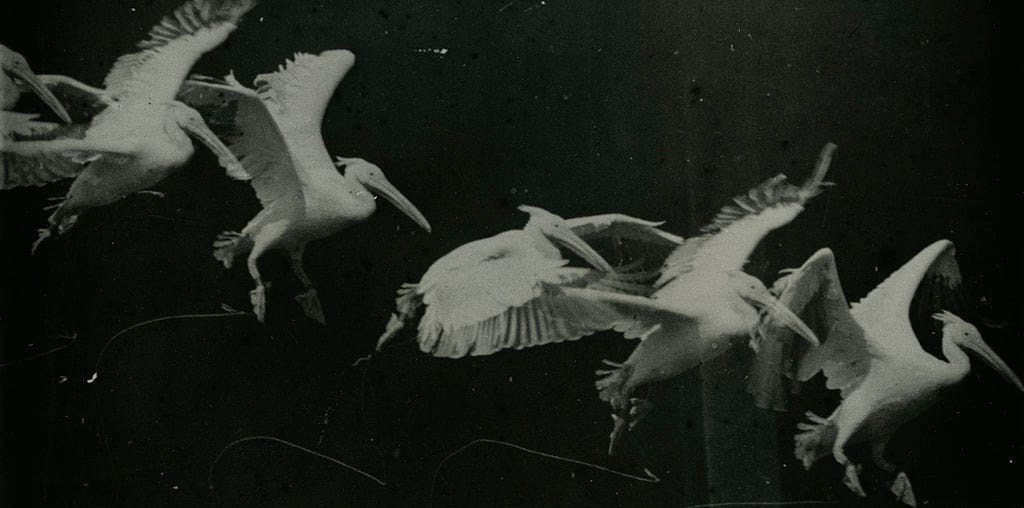
This is the quick eye at its most confident, the human mastering the bird’s flight by out-pacing it, breaking the wingbeat into stopped instants invisible to the naked eye. There is no story. In these chronophotographs, where successive instants fall onto a single plate, the movement overlaps into a chain, a bird smeared into twelve versions of itself, a wingbeat laid out as pure gesture. It is closer to a notation for dance than to anything we could call a tale. Movement studied as movement, abstracted, with no event attached. Marey compresses time into the frame. He stacks the instants so the eye does not have to hold them. What he leaves is a diagram of motion with no need to recount anything.
The pillar
A century and a bit later, Stephen Gill did something that looks like the opposite of Marey but might, in fact, be a strange kind of cousin.
Gill moved from Hackney to rural Sweden. In a field near his home he planted a post, mounted a camera on it and rigged a motion trigger so that birds landing would take their own pictures. Then he left. The camera fired when a bird arrived and The Pillar, the book he made, is a run of the same frame, the same patch of Swedish sky and field, with a different visitor dropping into it each time. A fox wanders through. A deer. Mostly birds, dropping in and lifting off again.
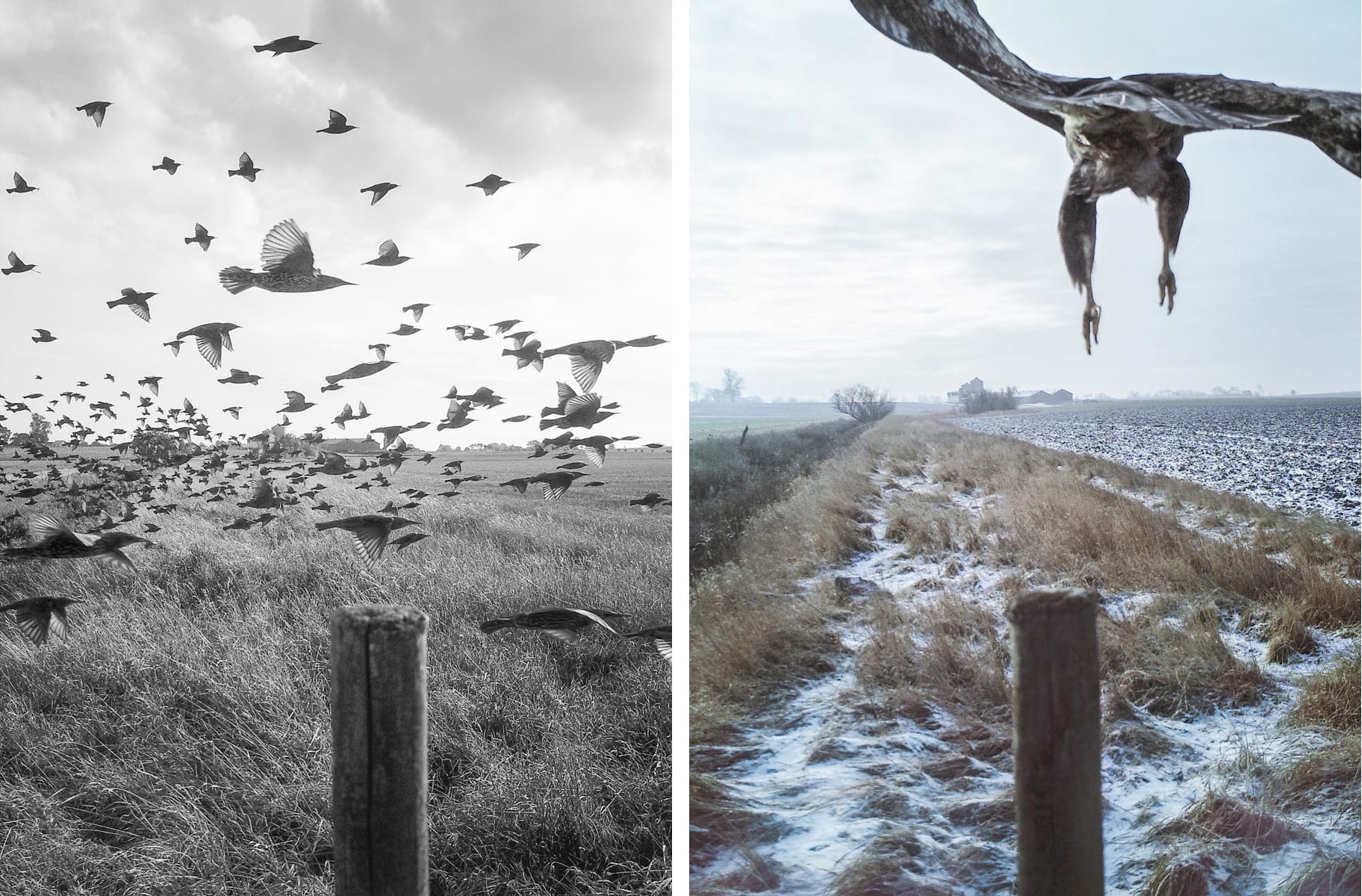
The photographer’s quick eye has been removed altogether. Gill was not there. The decision about when to make the picture, the choice Marey took down the barrel of his gun, has been handed to the bird. It trips the shutter with its own weight. In the language of Karen Barad, whom I stumbled through in an earlier post, the cut has migrated into the encounter itself. The apparatus is no longer an instrument the photographer points at a passive world. It has become a perch and the picture is something the bird and the post produce between them, a meeting of the universe halfway.
That it takes place in the midst of a landscape characterised by repetition, in which time is cyclical, sets up a keen existential dynamic: on the one hand, everything has happened before, there’s nothing new under the sun; on the other, every moment is unique and carries the hallmark of the miracle: what happens happens only once and never again.
But this wasn’t what I thought about the first time I looked at these photographs. In fact, I barely thought at all, for I was shaken, as a person so often is when confronted with an extraordinary work of art. I’d never seen birds in this way before, as if on their own terms, as independent creatures with independent lives. Ancient, forever improvising, endlessly embroiled with the forces of nature, and yet indulging too. And so infinitely alien to us.
— Karl Ove Knausgård
There is a growing sense, as you turn the pages, that the birds have taken to the game, that they know something is happening and have begun to perform. It may be true, since some birds can watch and learn and are cleverer than we think. Crows, jays, magpies and ravens. But it might also be the old trouble returning, the narrative impulse dressing recurrence up as intention and granting the birds a knowingness because we can’t bear a shape to repeat without a mind behind it. Fukase could not stop his ravens meaning something about him. Gill can’t stop his birds seeming to mean something about themselves. The meaning arrives, in both, in the gap between the frames, supplied by a viewer who won’t leave a returning shape alone.
Hurry slowly
Marey and Gill sit on either side of Fukase like two kinds of dance. One aims and compresses time, the other lays down the instrument and waits. Neither tells a tale, because both work in that register where gesture and recurrence stand in for event. Fukase, between them, loads his sequence with all the rhythm and pull of a story but with no narrative to hold.
Calvino took as his motto the old tag festina lente, hurry slowly. He had a fondness for its emblems of the dolphin coiled round the anchor. His lecture on quickness spends its second half defending slowness, digression and the pleasures of lingering. What he prized was the command of pace, the freedom to quicken and slow at will. “The more time we save,” he writes, “the more we can afford to lose.”
Our machines have taken the first half of that and thrown away the second. The camera gets quicker every year, the burst mode, the dozen exposures fused into one, the feed that refreshes before you’ve finished with the image in front of you. All of it is engineered to remove the wait and the friction. To make looking efficient. Interesting photographs and the books they populate do the opposite. They put the friction back. They force the page-turn and the back-and-forth, the small resistances that slow the eye down and make it work hard.
It would be easy to end by reaching for the birds, sending them off across the horizon as a metaphor for a medium migrating somewhere we can’t yet follow. I’d better not. A bird makes a poor vehicle for our meanings.
Where does that leave us? My school, like all others in the UK, is introducing a strict smartphone ban in September. It’s an attempt to create a protected space for greater concentration. A removal of distractions. My feelings about this are ambivalent. I can see the value in keeping at bay the demands of the digital world, but I’m troubled by our inability to tackle the issue of social media addiction head on. A ban removes the fast distraction but doesn’t, by itself, teach the slow attention. It might even let us believe the problem is solved by subtraction when the harder work, the cultivation of quickness, has not begun.
Meanwhile, the students I see two days a week have thumbs trained to move, to catch a thing and flick past it. They’re primed by their devices to look briefly and move on. The work I care about asks them to be quick in a different way. Festina lente. Quick enough to notice. Patient enough to remain.
Here’s the first memo on lightness:
Six Memos for the Future of Photography

This post is part of a short series responding to Italo Calvino’s Six Memos for the Next Millennium.
These posts will always be free but, if you enjoy reading them, you can support my analogue photography habit, and that of my students, by contributing to the film fund. Thanks to those of you who have already done so. All donations of whatever size are very gratefully received.