
War in the Meadow
Photography for children.

The Bayeux Tapestry was on the Radio 4 news last week. France is lending it to the British Museum, so that an embroidery about a Channel crossing will, after all these centuries, make one of its own. I’d just purchased a copy of L is for Look about children’s photobooks (review pending). I have a few examples of this kind of thing (I’m equally interested in photography and prisons) and had taken my battered, second-hand copy of John Pickering’s Photography for Children down off the shelf.
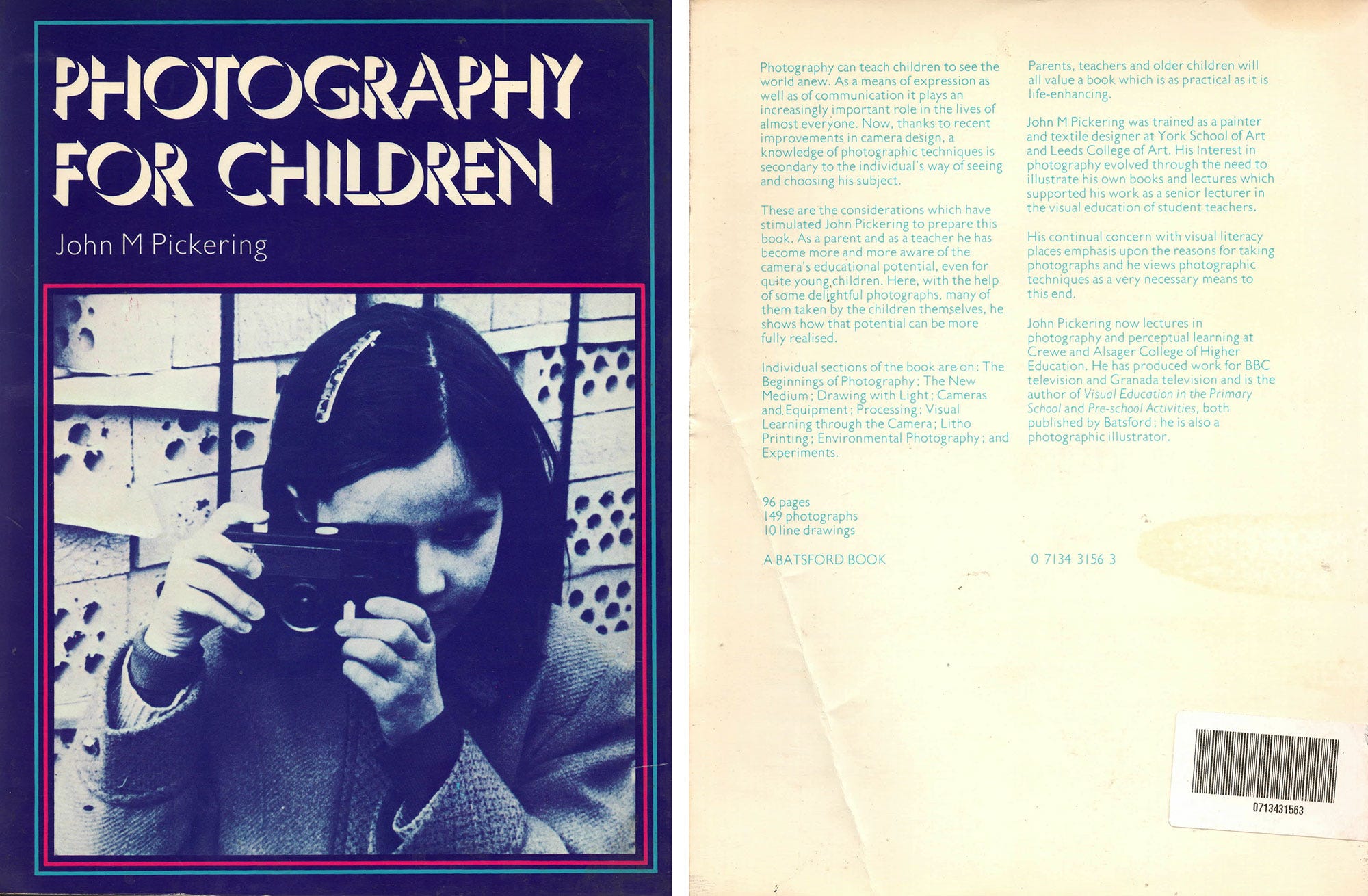
It’s from 1976, the year I started secondary school, and it has aged honestly and painfully. Despite Pickering’s fondness for the snapshot, and some generally sound advice about privileging neither technical craft nor aesthetic experimentation, photographers are all men, a good camera is a Hasselblad and the author’s fondness for lith printing has the quality of a private devotion. Most disturbing though, on page sixteen, beneath the chapter heading The New Medium of Photography, sits a photograph of a naked infant, captioned, “Starving child in Africa.”
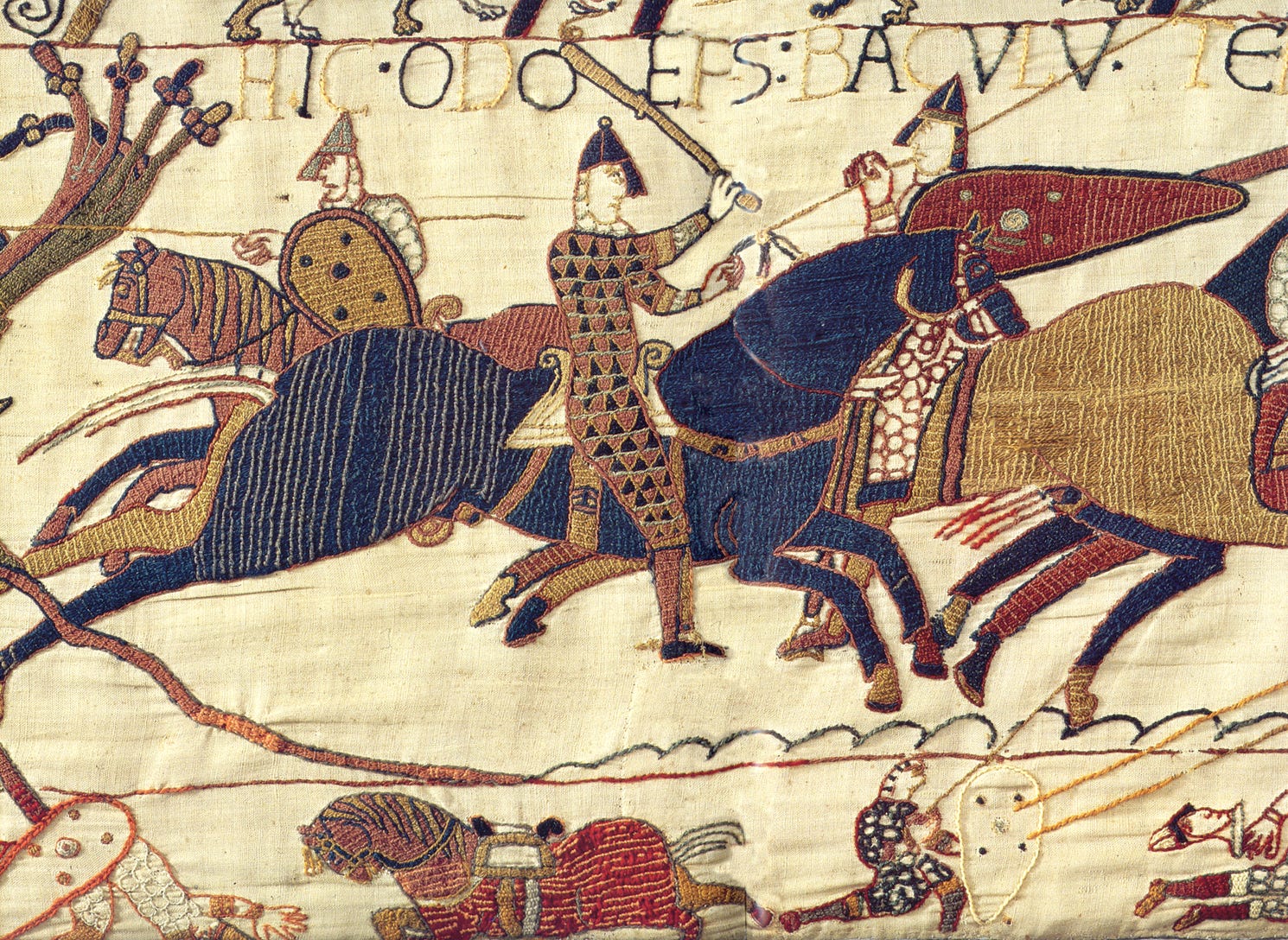
However, Pickering’s introduction also invokes the Bayeux Tapestry. Imagine, he says, how much more we would understand of 1066 if only they had owned cameras. He sounds a bit sad about it. It’s an odd idea. The tapestry is not a record that history was too primitive to take. It is embroidery, made by the winning side, an argument in wool about who had a right to the throne. It does not show the Conquest. It constructs it. There is a small additional irony, which is that Pickering himself trained as a textile designer, so of all people he might have known that a thing made in thread is a thing made, and not a window. Follow the thread and the tapestry keeps company less with the photograph-as-evidence he is pining for than with a piece of work buried forty pages deeper in his own book, with some children in Cheshire and a bonkers story about another kind of battle.
The sequence is called War in the Meadow. The children, nine or ten years old, invented a story that became a photo essay. Three friends are bored in a field. Strange things start to happen. They are chased by figures in gas masks. They fall into their school dinners. They disintegrate in an explosion of flowers. They are caught in a spider’s web and get away on a flying cup and saucer. Then they are back in the meadow, baffled. It is magnificent nonsense. And it’s rendered, in black and white, with a sophisticated understanding of analogue processes the children plainly didn’t possess. Two negatives are sandwiched in the enlarger to conjure the flying cup. The printers use a stock of ‘thin negatives’, kept low in contrast so that a cloud can be married to a face. The dream is the children’s. The grammar that makes the dream visible belongs to skilled adults.
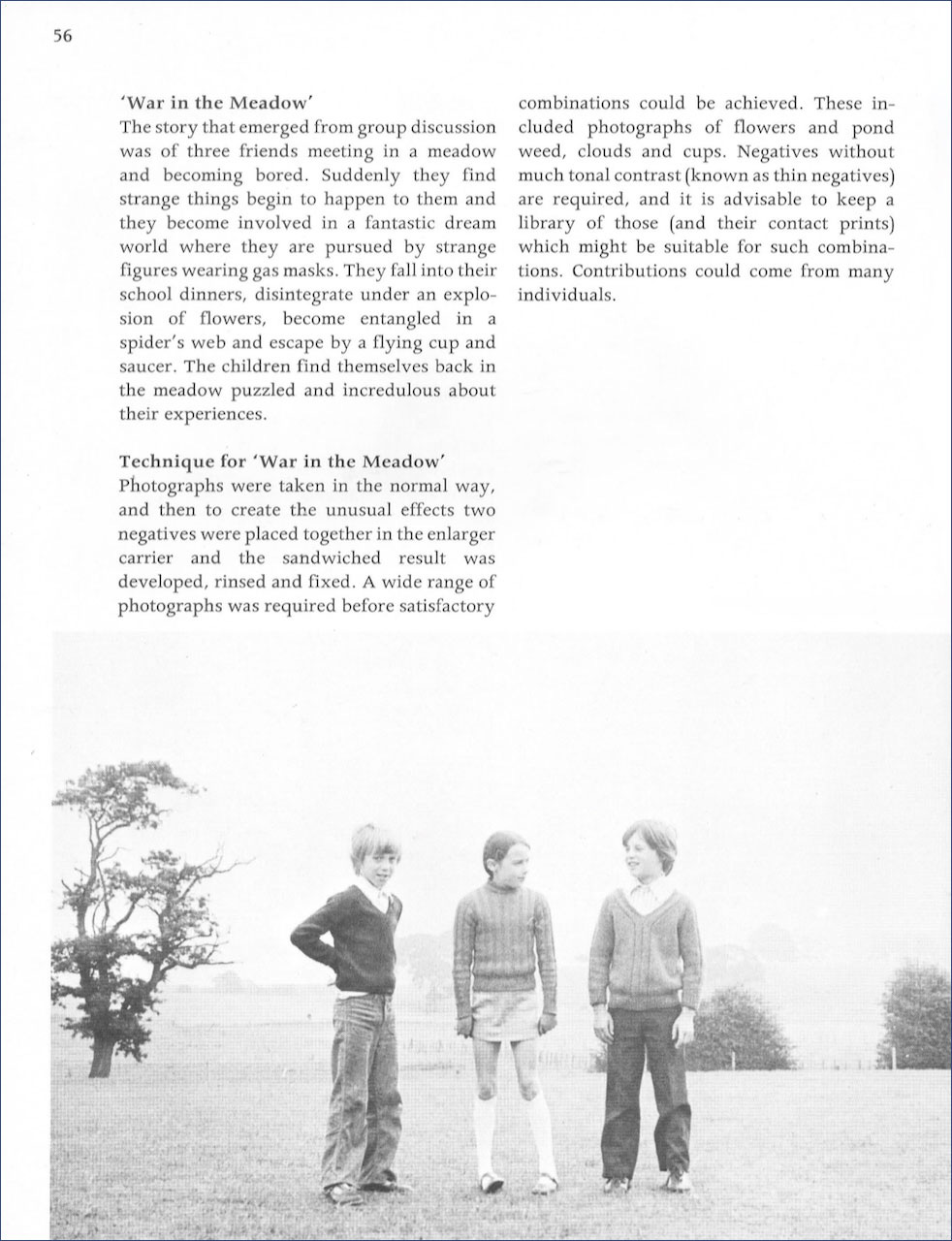
I don’t mind this at all. The war game is transformed by a medium and a person who understands a darkroom. It’s also returned to the children as something they didn’t entirely intend. And that gap, between the story as told and the thing the apparatus made of it, is the most educational space I know. A child saying “flying cup and saucer” to an adult, who then makes it appear, is issuing a prompt and the darkroom is the machine that renders it, slowly, through craft and time and an archive and another person’s knowledge. A child today types the same words and has the image in four seconds, altered by nothing, having met no-one.


My last Walk with Guido drifted into war and couldn’t find the way out. The girl on the road at Trảng Bàng, Didi-Huberman and the pictures made at Birkenau in spite of everything, a wooden box that a German prisoner made for my great grandparents, an enemy who came to kill and stayed to garden. I thought I’d finished with war for a while. Then I opened a children’s photography book and found it in every chapter. The tapestry brings a conquest. Page sixteen brings a famine. The meadow brings gas masks, and behind the gas masks a war that actually happened, because a British reader of a certain age knows where a gas mask in a 1970s field has come from. The country issued them in their millions and children once carried them to school in little cardboard boxes. War is what the Pickering book can’t stop photographing but never once names.
I sat down with the good people from APHE last week, after the conference that had to be called off because too few people registered. The talk turned, as it does, to purpose. What is the association for? What is a photography education for? The honest answer, which nobody quite says out loud, is that photography education’s purpose can’t be economic because on that ground it comes second to anything with a straighter line to a wage. It’s no longer my fight. Thirty-six years in one school, now teaching just two days a week. When I finally go, someone will take the register on Monday morning and the building won’t feel a thing. If photography education dwindles, it will be because too few people were willing to fight for it and I find I can say that without much despair. You do not make a case for a meadow. A meadow is not for anything. It gets mown. It comes back or it doesn’t, according to the weather and the will of the field. What you do with a meadow, while it’s there, is walk into it and look hard.
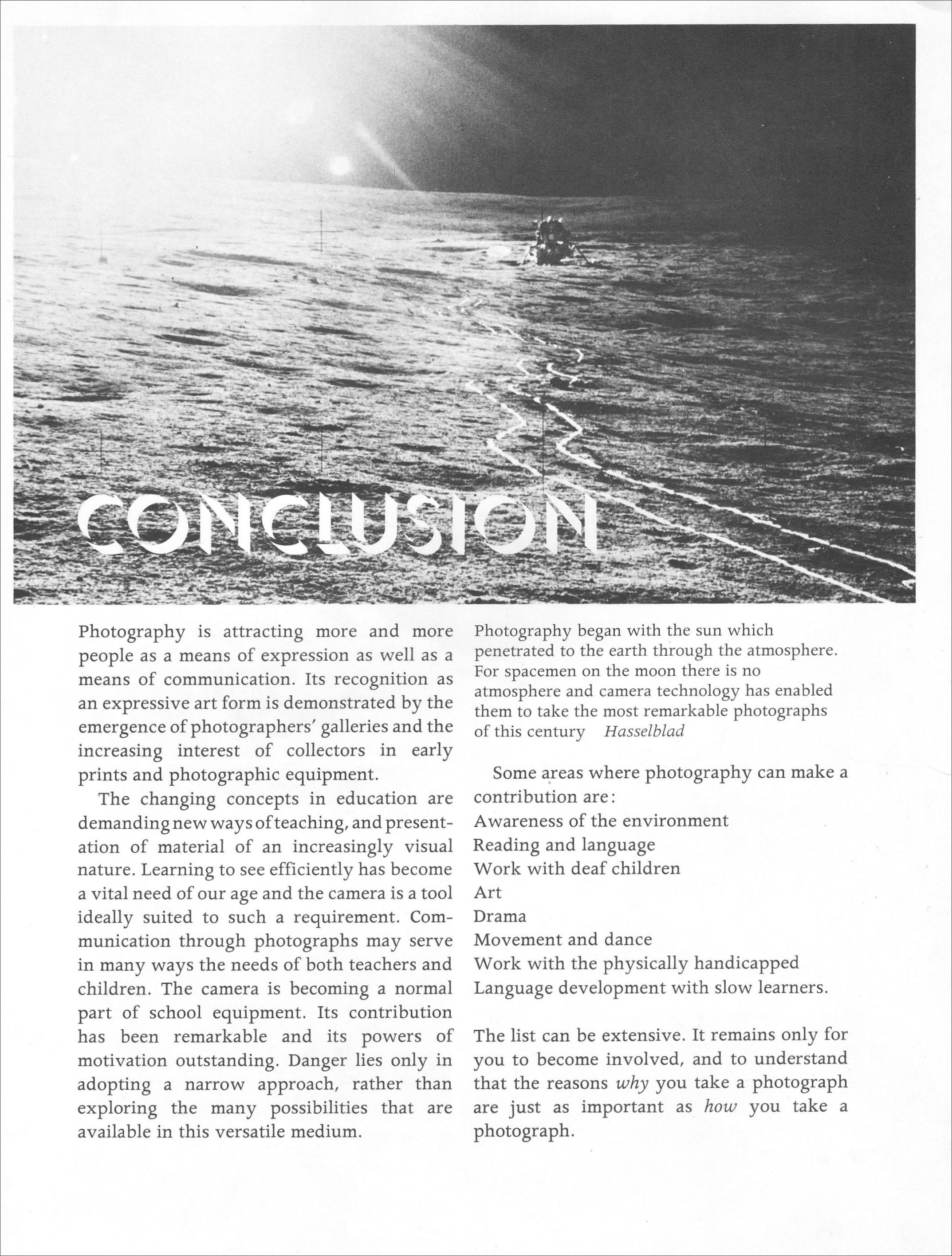
Pickering concludes with a list of possible purposes for photography education and a modest ad for Hasselblad.
The changing concepts in education are demanding new ways of teaching […] Danger lies only in adopting a narrow approach.
The children in the Cheshire meadow are pensioners now, like me. Photographed at nine or ten in 1975, they are past sixty, nearer the end than the start. They played at a war and the photographs have outlived the game and will outlive the players. The flying cup, the spider’s web, the school dinners they tumble into, the explosion of flowers; all of it machinery built to hold a child still. And yet all it shows now is exactly how a child can’t be fixed. The girl on the road at Trảng Bàng is sixty-three. One war was play; the other wasn’t. Each of them froze a child out of their own future and each has aged off-camera while the picture stayed young. The photograph is the one machine we have built for the express purpose of lying to us about time. We hand it to children. We call it an education. And on a good day, in a field, that is what it turns out to be.
These posts will always be free but, if you enjoy reading them, you can support my analogue photography habit, and that of my students, by contributing to the film fund. Thanks to those of you who have already done so. All donations of whatever size are very gratefully received.
Fascinating. It brings to mind Wilde’s Dorian Gray but inverted. ‘The photograph is the one machine we have built for the express purpose of lying to us about time.’ Wilde’s version has the portrait absorb moral corruption while the man stays young; your version has the picture just staying as a child, indifferently, while the actual person ages “off-camera.”
The price of a medium that freezes one moment and lets everything else keep happening.