Welcome to an intermittent new series of interviews with photography teachers. It relates to this post by Graham Hooper which explored the question ‘What is a photopedagogy?’ and a recent interview with Becky Nunes from APHE. I’ve always been interested in what makes photography teachers tick and the relationship between what and how we teach. I’m grateful to the lovely Neil Harman for helping to kick things off with some fantastic reflections from the chalk face. If you teach photography, at whatever level, and fancy taking part, do get in touch.
When you started teaching, what did you already know about teaching photography, and what did you have to learn through trial and error?
For me it’s always been a case of learning on the job. My undergraduate degree was in Fine Art, following a foundation year at art college. During that time, I’d learnt the basics of using the darkroom and knew the work of a few key photographers, but I had been using photography as a way to document art works rather than as an artform in itself. A few years after graduating, I found myself a bit lost and broke, so I moved back into my parents’ house and found a job as a photography technician at my former sixth-form college.
That coincided with the newly opened Tate Modern starting to show photography more seriously. I saw the Cruel and Tender exhibition there and vividly remember seeing Stephen Shore’s work in a gallery for the first time. It struck a massive chord. The technician job gave me the space and darkroom access to work on my own projects and experiment with different cameras, but it also forced me to learn on the job — learning studio lighting and Photoshop, which are skills I still use every day. Eventually, I began covering bits of the A-level course and running an evening class, so I decided that it was time to train as a teacher.
I moved back to London, did my PGCE at the Institute of Education, and then found a job as a photography specialist at a secondary school in West London. Looking back, the most exciting times in my career have been when I felt like I was learning alongside the students. That energy still motivates me. After a few years of full-time teaching, I became so obsessed with the medium that I went part-time to do a part-time Photography MA at the University of Westminster. Juggling that with a four-day teaching week was hectic, but it was incredibly fun. Later, I took on the role of leading the Art and Design faculty before we finally moved up to York. I still rely on that same energy today, alongside the inspiration I get from some brilliant colleagues and heads of department.
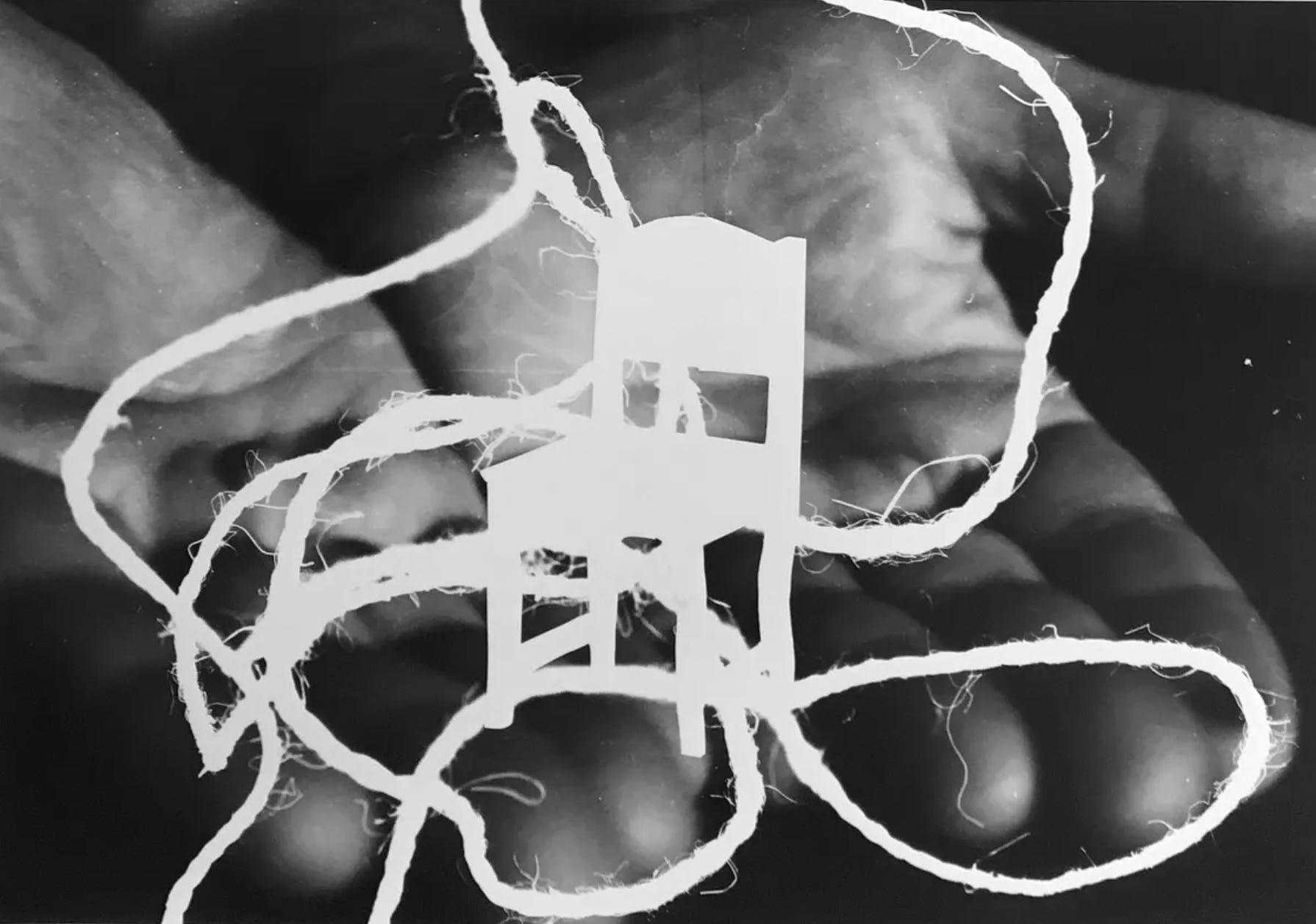
Early on in my career, I started a tradition that I still stick to now: showing students how to make a photogram in their very first lesson. I love the theatre of it — turning off the main lights, the red glow of the safelights, and that sudden silence in the room when a blank piece of paper slides into the chemical tray. The moment an image just materialises out of nothing, they are absolutely hooked. It’s pure alchemy, and it gives them something physical and handmade to hold in their hands on day one.
Beyond that, I am constantly learning through trial and error. Finding the balance between stepping in to support a student’s critical thinking and giving them the necessary space to make mistakes and figure it out on their own is an art form in itself — it can never be pinned down to a rigid formula. Schools talk a lot about “adaptive teaching” at the moment, but the truth is, teaching photography in a studio environment is always adaptive.
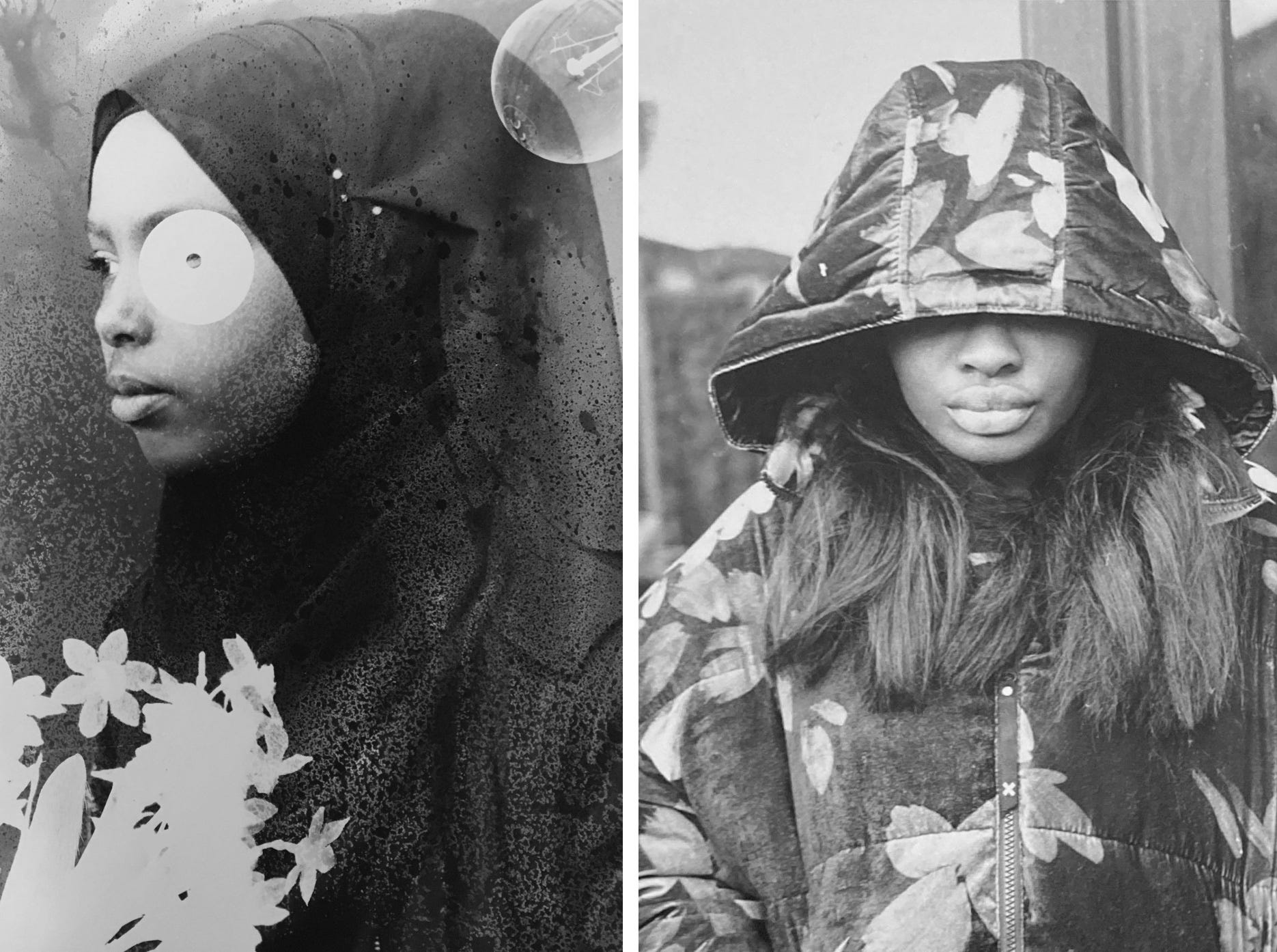
Examples of former students’ work
“Photography is one of the few subjects in the curriculum where the answers don’t exist in advance. Every single image a student creates is a piece of new knowledge.”
— Neil Harman
Describe your photography department. The room, the kit, the cohort, your colleagues, if any, and the budget. What challenges do you face?
Now, I work as a full-time art and photography teacher at a secondary school in York. When I first arrived, things were very different from my previous department; my timetable was spread across several subject areas, including DT, Textiles, and Food, and I shared the A-Level Photography delivery with the Head of Department.
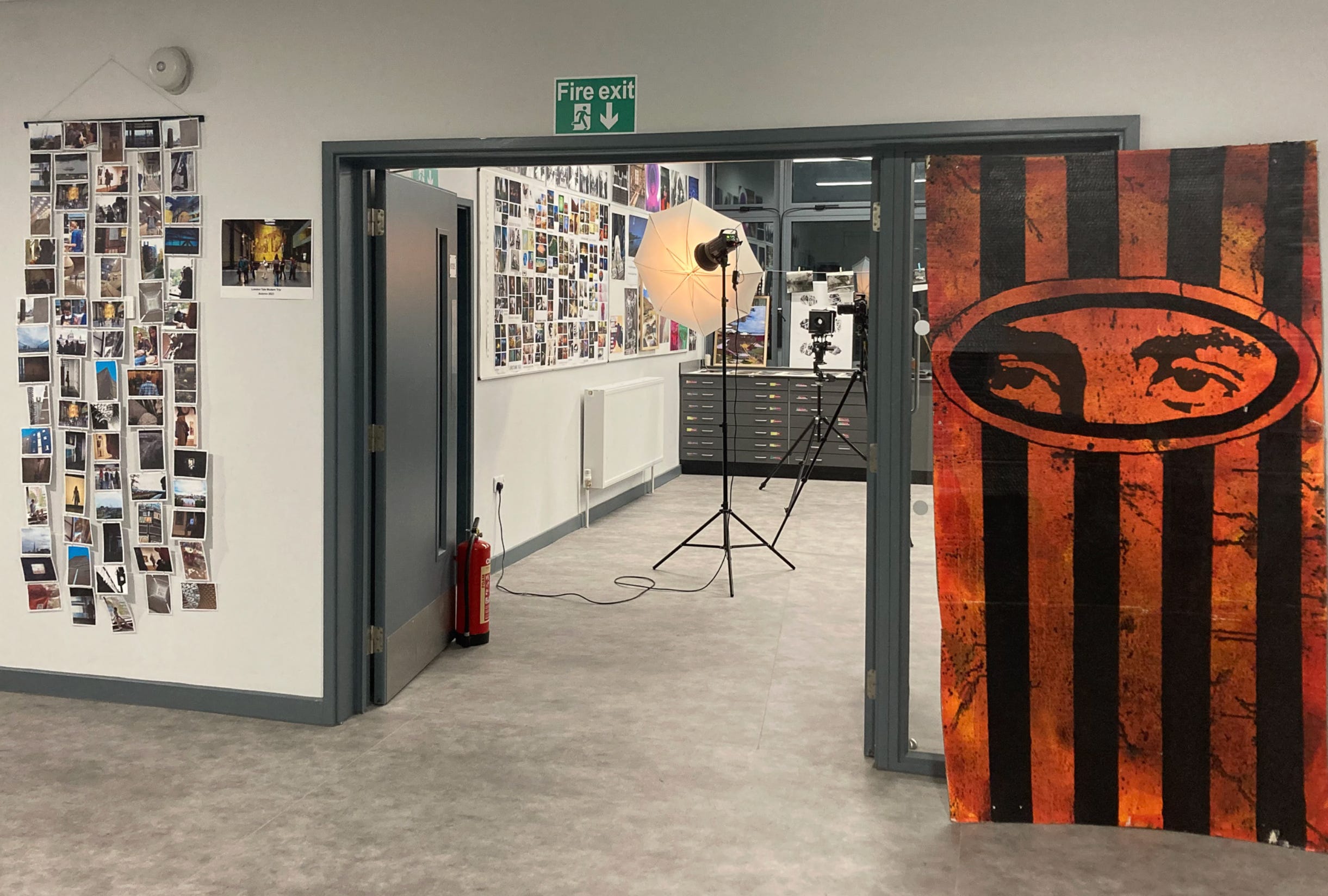
Our current setup is fairly simple. Most classes are taught in an ICT suite, and students build websites to showcase their portfolios rather than using the traditional physical sketchbook model. We have five DSLRs and a dedicated studio room equipped with a blackout system, two studio lights, and a black-and-white background. At the moment, we have one A-level cohort with about 12 students in each year group, and I’m currently working on introducing a GCSE option.
Since taking over, I’ve been gradually adapting the A-Level curriculum to introduce students to analogue approaches, providing an alternative to the purely screen-based learning that was dominant when I arrived. We’ve explored gelli-printing, cyanotypes, and zine-making. When you give them these materials they have to slow down. They encounter physical mistakes—scratches, dust, chemical spills. It forces them to look at an image rather than just consume it.
I’ve also set up a makeshift darkroom to introduce film processing and experimental printing — though it’s definitely modest compared to what I used to have! Happily, the school has just agreed to upgrade the studio and darkroom space into something more permanent, which is an incredibly exciting step forward.
Fulford School photography department
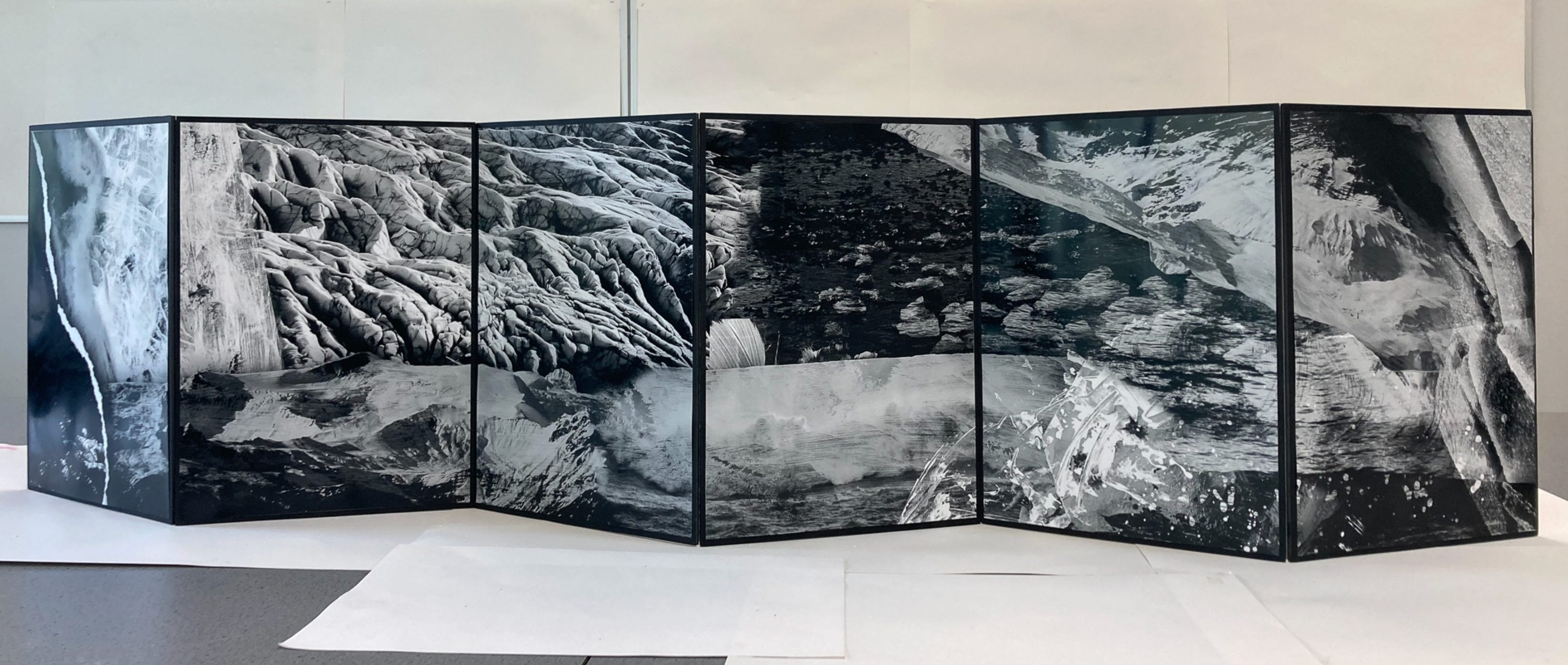
Neil with examples of current students' work
Does your practice feed your teaching? Do you share pictures with students?
More and more, I’m finding that my own practice directly fuels my teaching. I used to keep my personal work completely separate, but I’ve realised students are genuinely interested—and usually a little surprised—when I show them what I’ve been making. Showing my own work allows me to model my thought processes out loud and show them how a project can be actively shaped by historical or contemporary photographers. Students really appreciate seeing that their teachers are active practitioners.
Moving away from London highlighted just how ambiguous photography can feel as a school subject; students don’t always see where it fits or how a creative practice can hold meaning after they leave education. In London, the galleries are on the doorstep and imagery is everywhere; students see photography as a viable, visible career. In York, it can feel a bit more abstract to them, and we have a much lower percentage of students applying for photography degrees here. This is whyI try to bring the industry to them. We recently invited a highly successful commercial photographer into school to talk about their career, which really helped broaden the students’ perspectives on what is possible. I’d love to do more field trips and gallery visits to reinforce this, though organising them seems to get harder every year.
Neil Harman photographs
Tell me about your recent trip to Skinningrove. What took you there and what conversation, if any, are you having with Chris Killip’s work?
I relocated to Yorkshire from London about five years ago, and since then I’ve been exploring the area with my camera. I already knew Skinningrove through Chris Killip’s work, but it took some time before I realised just how close it was to places I visited on days out with my family. On one of those trips—after a day of fossil hunting with my wife and five-year-old—we decided to stop off there.
Neil Harman - Skinningrove, 2026
It was a quick visit, but I had prepared enough to pack a camera and some colour film. Choosing colour was deliberate, it stopped me from trying to emulate Killip’s black-and-white aesthetic. The visit was definitely an active response to his work, which I have a massive amount of respect for. Walking around, I felt like I was moving through the remains of his photographs, almost as if the landscape itself had become a set piece. Taking photographs there wasn’t an attempt to produce a finished body of work, but a way to gain a better understanding of his images and think through my own photography. That is something I find myself doing a lot at the moment: using the camera as a tool to physically think through my practice and reflect on it.
Where do you go for CPD? What has been valuable and what has been missing?
Our regular in-school CPD programme is good, but like in most schools, it isn’t subject-specific. To make sure I keep developing, I’ve joined our teaching and learning group to stay connected to wider pedagogy across the school. I also act as a PGCE mentor and the Art and Design subject lead for York St John University. Delivering sessions to postgraduates has been an amazing form of CPD for me, as it allows me to think about how we integrate photography into a broader contemporary art context.
For photography-specific development, I’ve looked outward and gotten organised within the local creative scene in York and Leeds. I joined a community darkroom in Leeds, which has been fantastic for hands-on, practical sessions that keep my own technical skills sharp.
Who are your peers? How do you talk to them and how often?
Aside from the colleagues in my school’s art department with whom I share the A-Level classes, my main peers are other photographers in the region. I try to attend a monthly photography meetup in York as often as I can. It’s a great mix of commercial industry professionals, enthusiasts, artists, and an educator or two.
I also have colleagues at other schools—like yourself—and people I’ve worked with in the past, though we only catch up occasionally. A few months ago, I attended an exam board standardisation meeting and started chatting with a few other photography teachers based around York and Leeds. It would be brilliant to establish something more permanent there, as there are so many practical tips and curriculum ideas we could be sharing.
I have to admit it’s relatively new to me, but I think an organisation like APHE could be a fantastic bridge for building a network of photography teachers and strengthening links with higher education. When you’re managing a heavy secondary school timetable, so many collaborative opportunities slip through the cracks simply due to a lack of time. Having a formal pathway to connect and share ideas would be incredibly valuable.
What would you want from a subject association?
A dedicated forum to discuss subject-specific issues and swap teaching resources would be a brilliant starting point. Beyond that, if we could use it to connect secondary school teachers with university practitioners, we might be able to coordinate joint gallery visits, regional trips, or student exhibitions and collaborations.
Can you think of a particular moment in your own teaching that illustrates what you value about photography education?
When we get to the end of the A-Level course and the students’ final work is up on the walls for the exhibition, I am always blown away by the sheer variety of ideas and conceptual approaches they bring to the table. Photography is one of the few subjects in the curriculum where the answers don’t exist in advance. Every single image a student creates is a piece of new knowledge—a visual record of their unique experience of the world. You really can’t top that.
Huge thanks to Neil for sharing his photopedagogy and drawing attention to the great work being done in photography classrooms across the country. If you’d like to take part in this series, let me know. Hope to see you IRL at the APHE conference on 9 July in Brum. Don’t forget to sign up soon so the good folks at APHE Towers know how many tea bags to order!
Thanks for reading PhotoPedagogy! Subscribe for free to receive new posts.
These posts will always be free but, if you enjoy reading them, you can support my analogue photography habit, and that of my students, by contributing to the film fund. Thanks to those of you who have already done so. All donations of whatever size are very gratefully received.
A great interview. I like to learn about other photographers' professional journeys and how they started, why they kept going despite the inherent setbacks and frustrations. Photography is (for me) right at the border of art, because it involves some specific techniques and tools which are somehow limitative in the wrong hands. I've encountered this dichotomy in my daytime job (a dentist is someone who failed at architecture, and similar jokes). Keeping the spark going, and teaching other people, especially teenagers, is something that definitely puts sense and consistence to photography as a wonderful way of storytelling, right up there with prose or poetry.
I’m in the United States, and when we apply for art teacher jobs, the postings don’t specify the content area. Six years ago, I was hired and later discovered that I would be teaching three beginning and one advanced photo class. I had absolutely no photography experience and mistakenly thought photography was incredibly boring. To me, photography was just a snapshot your mom took at a birthday party. However, I had a fantastic time learning alongside my students, and now the program has expanded to include seven beginning classes and three advanced ones! I discovered a passion for photography the first year I taught it and am now obsessed with it. I love sharing with students that while snapshots have their place, there’s so much more to this art form. I look forward to connecting with other photo teachers, and your blog inspires me every time I read it. Thank you!




A great interview. I like to learn about other photographers' professional journeys and how they started, why they kept going despite the inherent setbacks and frustrations. Photography is (for me) right at the border of art, because it involves some specific techniques and tools which are somehow limitative in the wrong hands. I've encountered this dichotomy in my daytime job (a dentist is someone who failed at architecture, and similar jokes). Keeping the spark going, and teaching other people, especially teenagers, is something that definitely puts sense and consistence to photography as a wonderful way of storytelling, right up there with prose or poetry.
I’m in the United States, and when we apply for art teacher jobs, the postings don’t specify the content area. Six years ago, I was hired and later discovered that I would be teaching three beginning and one advanced photo class. I had absolutely no photography experience and mistakenly thought photography was incredibly boring. To me, photography was just a snapshot your mom took at a birthday party. However, I had a fantastic time learning alongside my students, and now the program has expanded to include seven beginning classes and three advanced ones! I discovered a passion for photography the first year I taught it and am now obsessed with it. I love sharing with students that while snapshots have their place, there’s so much more to this art form. I look forward to connecting with other photo teachers, and your blog inspires me every time I read it. Thank you!