
An Attempt at Exhausting a Place in Kidbrooke
What happens when nothing happens?

What speaks to us, seemingly, is always the big event, the untoward, the extra-ordinary: the front-page splash, the banner headlines. Railway trains only begin to exist when they are derailed, and the more passengers that are killed, the more the trains exist […] What is scandalous isn’t the pit explosion, it’s working in coalmines […] What’s really going on, what we’re experiencing, the rest, all the rest, where is it? How should we take account of, question, describe what happens every day and recurs everyday: the banal, the quotidian, the obvious, the common, the ordinary, the infra-ordinary, the background noise, the habitual?
— Georges Perec, Approaches to What? 1973
By the time you read this, I will have taken my Year 12 photography class to the local housing estate for a couple of hours in order to pay attention to the infra-ordinary.1 This is part of a small enquiry we are undertaking into the theme of The Everyday in photography.
I’ve borrowed a Perecian title for the activity because it sounded amusing - An Attempt at Exhausting a Place in Kidbrooke. It’s not Paris and the local square is nothing like the Place Saint-Sulpice! We also can’t devote three whole days to the exercise. Nevertheless, we are going to spend a bit of time wandering about, paying attention to the banal, the quotidian, the obvious etc.
Here’s the map of the area we hope to survey:
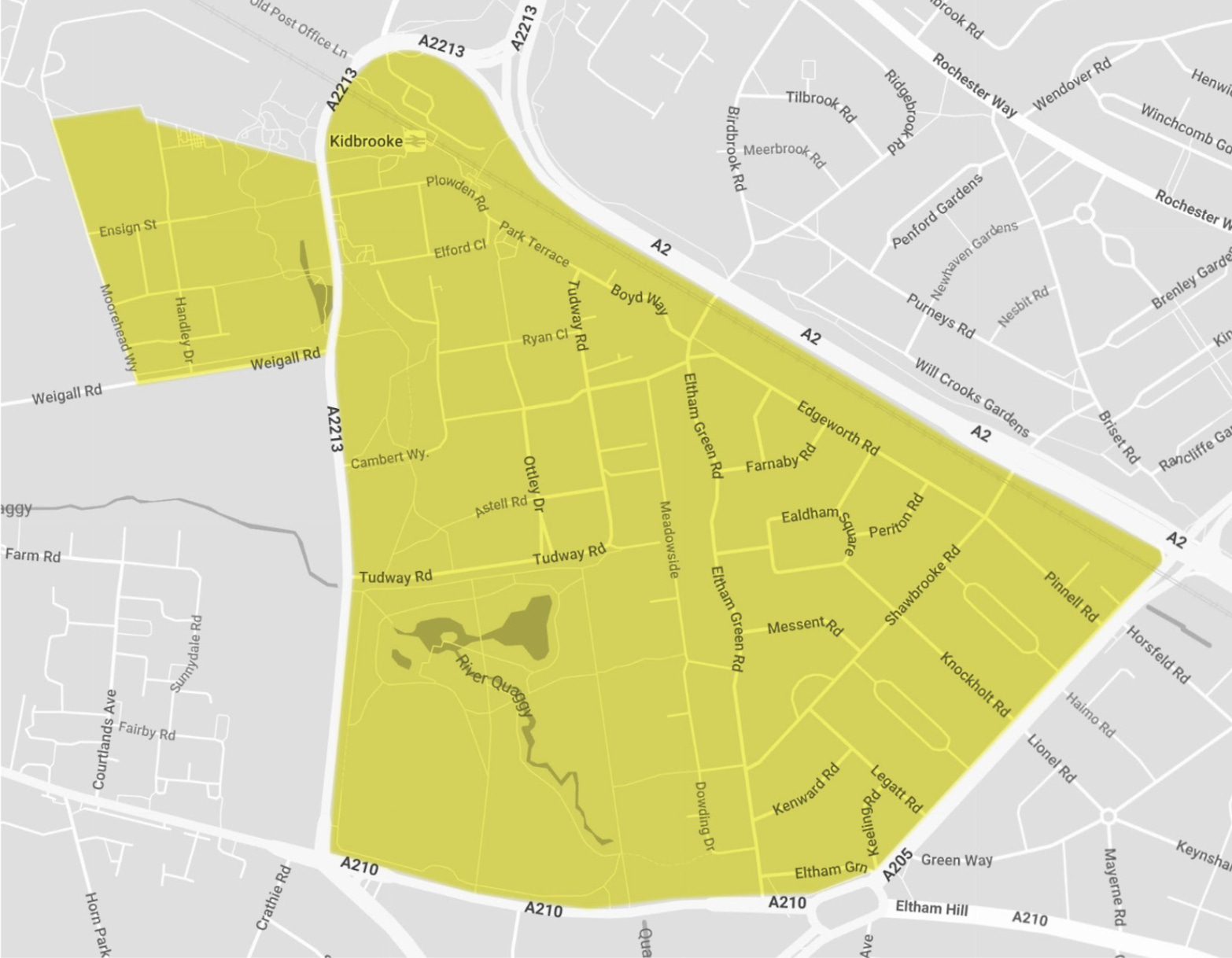
By the time we’ve dished out some cameras and walked down there, we’ll have just over an hour. I’ll leave it to the students to decide whether they want to split up into smaller groups or travel as a pack, how far they want to go and what they want to try to discover.
I’m taking the opportunity to introduce them to a couple of (hopefully) useful ideas as part of our interest in theories (or concepts borrowed from other disciplines) that have impacted on photographic practices.
This is what I’ve given them as a prompt:
Ideas & Influences:
Georges Perec’s experiment in capturing the infra-ordinary, sitting for three days in the Place Saint-Sulpice attempting to record everything he noticed. “What happens when nothing happens?” Published as An Attempt at Exhausting a Place in Paris, 1974
The Situationist International and their concept of the dérive - a drift through the urban environment, paying attention to changes in ambiance: “In a dérive one or more persons during a certain period drop their relations, their work and leisure activities, and all their other usual motives for movement and action, and let themselves be drawn by the attractions of the terrain and the encounters they find there.” – Guy Debord, Theory of the Dérive, 1958
Psychogeography - A term coined by The Situationists, still in popular use today, to describe a method of subjectively analysing geographical locations. According to Debord, psychogeography is “the study of the precise laws and specific effects of the geographical environment, consciously organised or not, on the emotions and behaviour of individuals.”
Peter Mitchell - A New Refutation of the Viking 4 Space Mission, 1979
Activity:
Imagine you are visiting Earth from a distant planet and have landed in Kidbrooke. You have 60 minutes to explore the area in the map above. Roam freely. Document whatever seems interesting in a series of carefully composed photographs. Pay attention to your surroundings and try to capture the essence of the locality. Your photographs will form an important document of human culture.
The activity is directly inspired by Peter Mitchell’s brilliant images of 1970s Leeds, recently on display at The Photographers’ Gallery.2 What would Kidbrooke look like to a Martian?
Whilst I was thinking about this activity at the weekend, I decided it might be a good idea if I attempted it myself. Here are some of the pictures I made:


This is an area I know really well. I live just down the road. However, something about re-framing the activity as a deliberate search for the infra-ordinary, from the perspective of a Martian (!), helped me to see it differently.
The quality of my attention was enhanced. I was more inquisitive, looking for clues about the texture of the area, the cultural milieu, the signs of human presence and the juxtaposition of natural and manufactured forms. I began to see the area as overflowing with subtle, yet insistent, evidence of life.
It was, I’m not ashamed to say, a thrilling couple of hours.
I used a manual 6x6 camera with no light meter. Looking down into the waist level viewfinder, and taking the time to measure the light, helped me to slow down and photograph with more intentionality. However, this is something that can also be achieved with a digital camera. A kind of mental trick you can play on yourself. For example, I sometimes encourage the students to think about each frame having a financial value:
Imagine that each of your photographs costs you £2-3. How might this change the way you operate your DSLR/Phone?
Part of the motivation for thinking about Perec’s instruction to question our teaspoons is to encourage the students to consider how their understanding of everyday life has been shaped by the forces of capital, the media industries and the process of mass consumerism. Why are we constantly bombarded with news of disasters, celebrities and bizarre events? Why do advertisers love photographs? What did Guy Debord mean by the Society of the Spectacle? What is the relationship between the exotic and the endotic?3
These are complex and multi-layered questions. However, I do think it’s important for young photographers to engage with them. Photography has often been accused of being inherently voyeuristic. The language of photography is acquisitive and violent (flash, capture, shoot, take etc.) and photographs have frequently been used to objectify, appropriate and distort.4
Photographs are seductive because they pretend to show us what things look like when, in fact, they are abstractions shaped by technology.5 It’s easy to believe what a photograph purports to show us, especially when it’s accompanied (as is often the case) by an appeal to our desires and prejudices.6
If photography is frequently in the wrong, how do we help young photographers consider more ethical uses for the medium? What good is photography?7
For me, one of the ways in which photography can be life-affirming, a way to resist the urge to passively consume, is when we use it to help us pay attention - to be the subjects of our own lives. This is where Perec’s advice is so important:
The street: try to describe the street, what it’s made of, what it’s used for […] People in a hurry. People going slowly. Parcels. Prudent people who’ve taken their macs […] You might see a cat slip underneath a car but it doesn’t happen.
Nothing is happening, in fact.
[…]
Carry on
until the scene becomes improbable
until you have the impression, for the briefest of moments, that you are in a strange town or, better still, until you can no longer understand what is happening or is not happening, until the whole place becomes strange …
— Georges Perec, Species of Spaces, 1974
Photography as a process of making strange.
In other words, maybe a camera is the perfect instrument for seeing beyond the habitual, expected, conventional surface of things and for living in the moment - alert, focused, aware, responsive and hopeful.
Perhaps, with Perec in mind, the camera can help us figure out what happens when nothing happens.
These posts will always be free but, if you enjoy reading them, you can support my analogue photography habit by contributing to the film fund. All donations of whatever size are very gratefully received.
The newly built Kidbrooke Village, formerly the infamous Ferrier Estate, in south east London.
Lots of the students have been to see the exhibition so are familiar with Mitchell’s pictures.
I try to offer some potential answers to this question, borrowing ideas from Gert Biesta in two posts: The Only Way is Ethics Part 1, and Part 2.
I love this approach. There is so much delight and surprise to be found in any place by paying close attention.
Love the idea!