
Correspondence
On photography, connection, and collaborating with the world.

Susan Sontag haunts anyone who thinks seriously about photography. Here she is, in On Photography, describing what the camera does:
To photograph is to appropriate the thing photographed. It means putting oneself into a certain relation to the world that feels like knowledge—and, therefore, like power.
And later:
Photographed images do not seem to be statements about the world so much as pieces of it, miniatures of reality that anyone can make or acquire.
It’s a brilliant and uncomfortable diagnosis. Photography as extraction, as possession. The camera turning the world into collectible fragments, leaching experience into mental objects. These words have been lodged in my mind since I read them in the early years of my photography teaching career. Like a stubborn splinter. But I want to push back a little. I want to ask whether Sontag’s formulation is the only one photography offers. Is there another disposition or habit available, especially to young photographers? One that connects them to the world rather than alienating them from it.
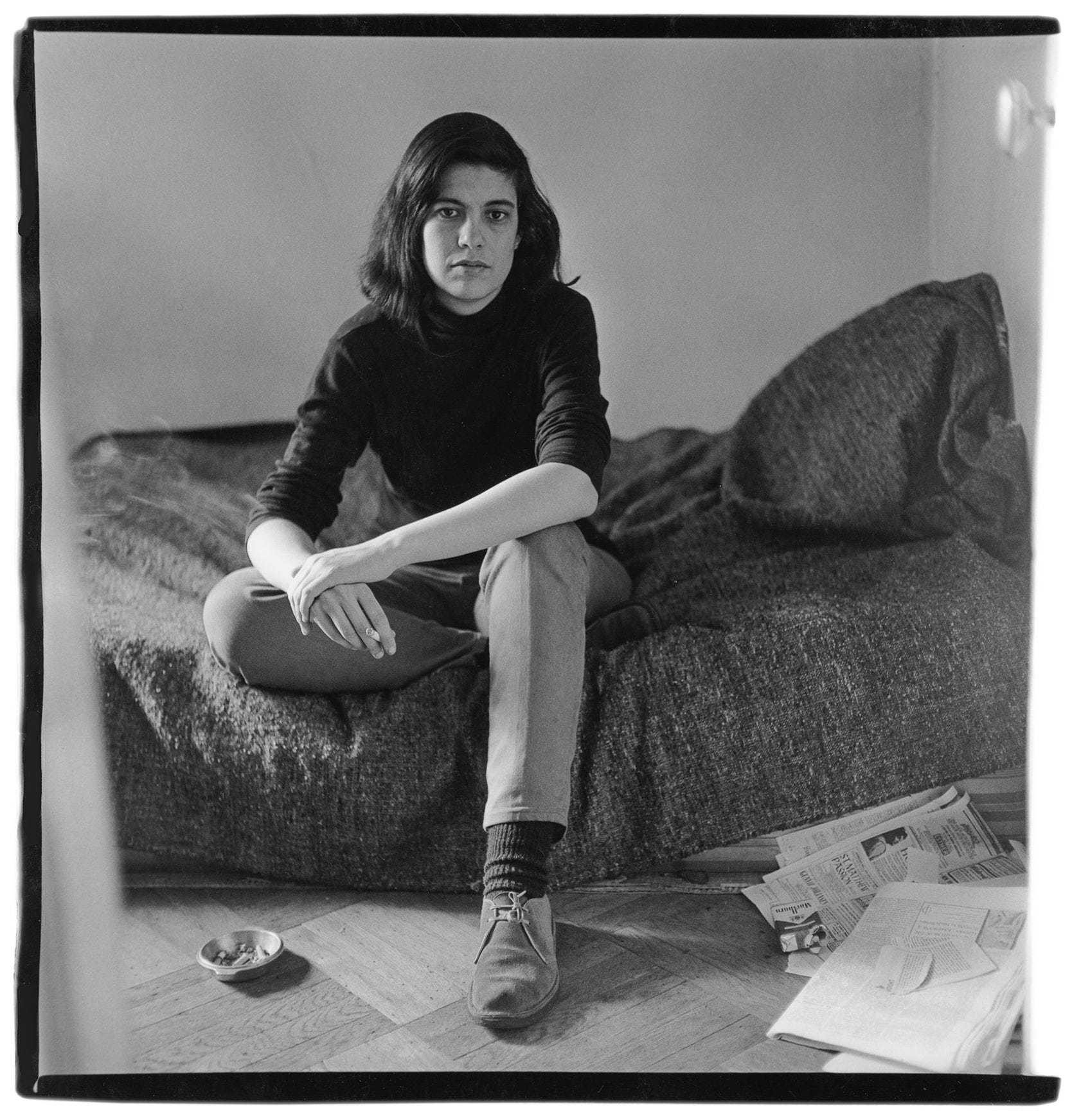
Entanglement
A while back, I read Alva Noë’s The Entanglement, a book about how art and philosophy help us become who we are. His argument is dense but the core idea is that we are not fixed creatures observing the world from inside our skulls. We are entangled with our environment, shaped by habit, culture, technology, biology. And the arts, including photography, offer a way to become aware of this entanglement, to disrupt our habitual organisation, and in doing so, to remake ourselves. Noë argues that life supplies art with its raw materials, but remakes life by giving us resources with which to live. Our lives are aesthetic. Human nature is an aesthetic phenomenon.
If photography only took from the world, it would be a one-way extraction. But what if it also gives something back, not to the world, necessarily, but to the photographer? What if the act of photographing attentively remakes how we see, how we attend, how we exist?
I wrote about this last year when I was photographing rotting apples in my garden. What began as a chore, clearing windfalls, became something else when I looked more carefully. The textures, the mould, the russety decay. I was using an unfamiliar camera and unfamiliar film, which disrupted my habits. The photographs that emerged weren’t acquisitions of the apples. They were traces of an encounter that changed how I saw them, and in some small way, how I saw myself. Noë calls this “looping”. Art displays our organised ways of seeing, disrupts them, and reorganises them. We loop through the artwork and come back different.
Correspondence
Philip Perkis, the American photographer and teacher who died last year at ninety, spoke about photography as a search for “correspondence between his inner life and what he sees.” This is a different word from entanglement, but it’s reaching toward something similar. Not taking, but responding. Not possessing, but aligning. In the documentary Just to See, a Mystery, made by his former student Jin Ju Lee, Perkis describes how losing his sight in one eye changed his photographs, made them “closer to the bone,” “more emotional,” “more akin to drawing.” He was still photographing, but now with a heightened awareness of what the act cost and what it gave. His images became records of attention, not acquisition.
I keep pondering his description of “pre-logical intelligence”, the knowledge that comes before words, the seeing that happens before naming. In Teaching Photography, he tells a parable about a child who points at a dog and says “dog,” and the parents celebrate this act of classification. But what about the light on the dog’s fur? The tilt of its head? The gestures that can’t be verbalised? We reward the naming and ignore the seeing. Photography, for Perkis, was a way of cultivating seeing. Not adding more words to the world, but attending to what words miss.
Tim Ingold, the anthropologist, uses “correspondence” differently but relatedly. In his book Correspondences, he describes a way of being in the world that means “going along with” the beings and materials we encounter, joining our lives with theirs, moving alongside. The correspondent attends. The correspondent responds. The correspondent is changed by the exchange.
Maybe this is what photography can be, when it’s done with care. Not appropriation but correspondence. Not taking but acknowledging.
The gesture of pointing
Gert Biesta, the educational philosopher I return to constantly, describes teaching as a triangular relationship. The teacher doesn’t simply transmit knowledge to the student. Instead, the teacher points, at something in the world, something the student might not have noticed. It’s a disruption. An instruction to pay attention to something, for someone. “Hey, you! Look at this.” The teacher mediates, but the goal is encounter, not distance. I’m grateful to Mark Epstein who contacted me recently about Biesta. He pointed me to a recent talk, in which Biesta speaks about the “aesthetics of education”. He doesn’t mean beauty or art appreciation. He means something more fundamental: the act of bringing something into the student’s field of perception. Focusing attention. Creating the conditions for encounter.
The teacherly gesture tries to say no more than ‘look, there is something there that I believe might be good, important, worthwhile for you to pay attention to.’ And this gesture not just focuses the attention on the world ‘out there’ but in one and the same move brings the ‘I’ of the student into play.
Biesta’s argument is that pointing is the fundamental gesture of education. This is the structure of photography too, isn’t it? The photographer points the camera at something in the world that has shown up for them, that they believe might be worth attending to, and in doing so, they bring their own “I” into play. The photograph is not just a record of what was there but a trace of attention, a gesture of pointing. Does this make the camera a kind of teacher, mediating our relationship to the world?
Biesta wants education to help young people “live in and with the world in a grown-up way”, facing reality rather than retreating into fantasy, accepting what resists our control, taking responsibility for how we respond. Photography, taught carefully, can contribute to this project. The world doesn’t arrange itself for our convenience. Light does what it does. The moment passes. Learning to work with these resistances is a form of growing up.
Collaborations
I’ve been thinking about all this in the context of several collaborations, each of which has taught me something about correspondence.
I collaborated with photographer Tereza Červeňová on a school trip to The Barbican in November. With Crina Prida, I’ve been playing games of Photo Ping Pong using the Foto app, trading images, responding to what the other has sent and building something together. With Chris Francis (Artpedagogy), I developed the PhotoPedagogy website that’s now ten years old, working out ideas together about what photography education might be. In collaboration with Autograph Gallery, my school recently hosted Dialogue in the Making, an exhibition that emerged from sustained exchange between students, artists, and curators. And Substack itself, which I’ve been using for a year now, has led to so many new connections.
All these conversations are feeding the creation of a new book about teaching photography.
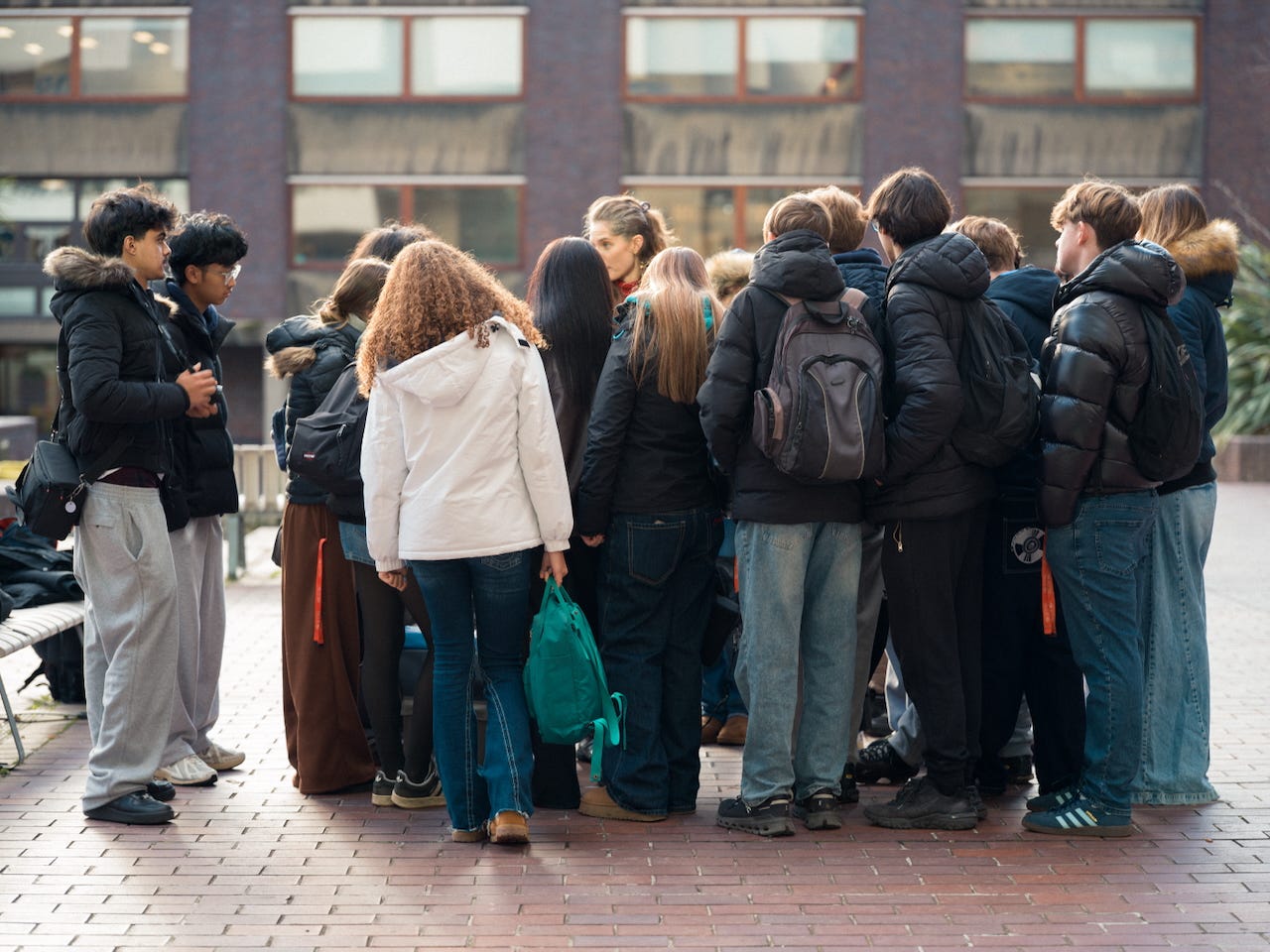
These are human collaborations but they’ve made me attend to other kinds too. The collaboration between photographer and subject. Making portraits that require collaboration on both sides of the camera. The collaboration with chance. Thinking about photography as responsiveness rather than control. Even photographing objects involves a kind of dialogue, if you’re paying attention.
I’m really enjoying the excerpts from the archives of writer Brad Zellar. He has collaborated extensively with photographer Alec Soth, and describes looking at photographs as like hearing voices. His restless inquisitiveness has led to many strange and vivid encounters. In a recent post he refers to the poet Richard Hugo:
Richard Hugo had a theory that I love about the role of artists. He said, I think, that what we are all really trying to do is show people around. I think that’s perhaps truer of photographers than it is of other artists. All my life I have depended on artists to show me around the world, to coax me out of my little town, and my house, and to feed me words, and dreams, and to make me look hard at people and things I wouldn’t otherwise have looked at, listened to, or seen. I think the one worthy goal is to try to make a contribution, to connect …
Photography can do this. You and the world and the camera, entangled.
Against alienation
I don’t want to be naïve about this. Photography has done enormous harm. It has served surveillance, colonial classification, objectification. Sontag was right to be suspicious. The acquisitive, possessive, extractive mode she describes is real, and it’s probably the dominant mode in a culture saturated with images taken without thought and consumed without attention. But I don’t think it’s the only possibility. The same tool can be used to take or to attend, to dominate or to correspond. What matters is the disposition we bring. Not acquisitive or possessive. Definitely not condescending. Something else is needed. Something that acknowledges the reality of what we’re photographing, even the things that appear inert. A windfall apple. A patch of light. A bench.
The camera can be a way for us to notice reality, to say “Yes” to inchoate, liminal, ephemeral experiences. To pay attention and, in doing so, to turn up as ourselves, as agents of our own lives, not just consumers of images. This is what Biesta means by “grown-up”: not a matter of age, but of how we relate to a world that exists beyond our wishes. Photography, taught carefully, can help with this. It can teach attention and responsibility. It can teach the ethics of looking. It can teach us that we are entangled with what we see, and that this entanglement might be a gift rather than a trap.
I’m still working this out. It may be that Sontag’s diagnosis is fundamentally correct, and what I’m describing is a minor counter-tradition, a way of working against the grain of the medium. Or it may be that the alienating mode she describes is historically contingent. The product of particular institutions and habits that could be otherwise. I don’t know. There are certainly many fine photographers who make beautiful, sometimes challenging, work that explores the connecting power of images.
I prefer to teach photography as if correspondence were possible and that the camera can connect us to the world.
I believe that the greatest works of art are really trying to shift your perception of the world through a way to relate to the world. If what you’re doing is saying “It’s my world,” it’s less moving. When I encountered some works of art — either novels or photography — earlier, when I discovered photography, I thought: oh, you can experience space, or you can relate to people that way. It was never “This is the world of the photographer,” much more “This is how the photographer approaches the world.” That’s what I think is the most beautiful. There’s also an ethical aspect to it […] I don’t pretend to be all-knowing. Accepting — that’s really more than enough. At that moment — who I am as a person, what I think as a person, what my emotion as a person is — that is the thing. And […] at the moment when I photograph, I just try to welcome something or someone in a frame. And that’s it.
— Thomas Boivin
If you’ve read this far, I’d love to know what you think.
These posts will always be free but, if you enjoy reading them, you can support my analogue photography habit by contributing to the film fund. All donations of whatever size are very gratefully received. Thanks to those of you who have made a contribution. It means a lot.
Some seriously incisive thinking and writing about photography here. Thank you Jon Nicholls. As I stood on a pedestrian bridge outside Minneapolis' Walker Art Center yesterday afternoon, photographing ICE protestors and their signs, freezing my butt and fingertips off, I realized that there was no need to photograph faces, because mittens, hats, scarves, and pen-scribbled cardboard were telling the story just fine. Besides, faces are all covered up anyway.
Good post, Jon! Stuff to think about. Does it matter that Susan Sontag recanted after meeting Annie Leibovitz, and started to understand at least AL's photography. She pretty much acknowledged that had she known what she knows now, she would not have written On Photography the way she did. The entire photography world seems to keep wringing its hands over Sontag, when Sontag doesn't even believe Sontag.....? 😃