
No Punches Pulled
On editing, sequencing and getting out of the way.

I recently bumped into Lewis Bush at Peckham 24. We chatted about allotments, semi-retirement (mine, not his), PhDs (his, not mine). We didn’t really talk about the many excellent photographs in the exhibition. And I forgot to ask Lewis if he’d come back to my school to run another workshop.1
But this project didn’t start with Lewis. It started, as several things have recently, with discovering a couple of new web apps.
Teaching photography, at both GCSE and A-level, involves the challenge of technology. We are blessed with lots of it at my school. Macbooks and an A3 laser printer. Adobe Suite. A darkroom. I can’t complain. But not all of it works all the time. All photography teachers can tell you about lessons that have fallen apart quickly because of failed tech. Also, skills like selecting, sequencing, contextualising and presenting work to an audience are genuinely hard to teach well. Not because they’re conceptually difficult, though they are, but because the tools that support them have traditionally imposed their own demands. Teaching layout in InDesign means teaching InDesign. Teaching sequencing in a print context means navigating print logistics. Both of those obstacles pull attention away from the photographs. The technology becomes the focus of the lesson, which is the opposite of what you want.
I’ve been looking for solutions to this for a while. Recently, answers have presented themselves here on Substack.
Ramon Haindl is a photographer and filmmaker based in Germany. Earlier this year he built an app called Small Town Zine Club, a browser-based, free tool for making saddle-stitched booklets. He built it almost by accident. He was trying to make something to replace his InDesign subscription, started playing with AI coding agents, then watched it grow into something more substantial. He wrote about it on his newsletter, Notes from the Lab. There are a couple of other excellent single-page zine editors out there (Dirty Little Zine is one I’ve been using and can recommend). Crucially, Small Town Zine Club handles the booklet format, with page imposition sorted automatically. You upload your images, arrange them and it produces a correctly laid-out PDF ready to print, fold and staple. Simples.
When the software stops being an obstacle, students start thinking more carefully about the photographs. Which image belongs at the front? What happens when you put these two on facing pages? Does it matter that this one comes before that one rather than after? These are the questions that get lost when half the lesson is troubleshooting export settings. The tool should serve the thinking, not compete with it.2
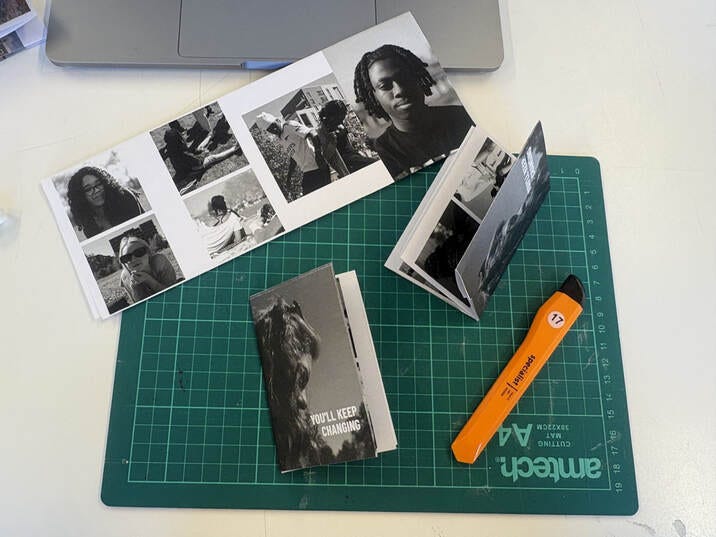
We began with simple one-page zines using the Dirty Little Zine app, which is a brilliant introduction to the basic editorial decisions: what to include, what to leave out, what to place where. Small Town Zine Club extends that into something with more structural complexity. A booklet has a front cover, a back cover, an inside sequence, facing-page relationships, a beginning and an end. Each of those is a decision. Each decision is a conversation waiting to happen.
Ramon generously provided a class code so students could make multiple versions. He wants to see how the app gets used in educational contexts, which is part of what I find valuable about this kind of exchange. There’s something that happens when you’re paying attention to what photographers and developers are building in public (following their newsletters, noticing what they’re experimenting with, occasionally running into them in Peckham) that formal professional development rarely replicates. Ideas move through those encounters in ways they don’t through official channels.
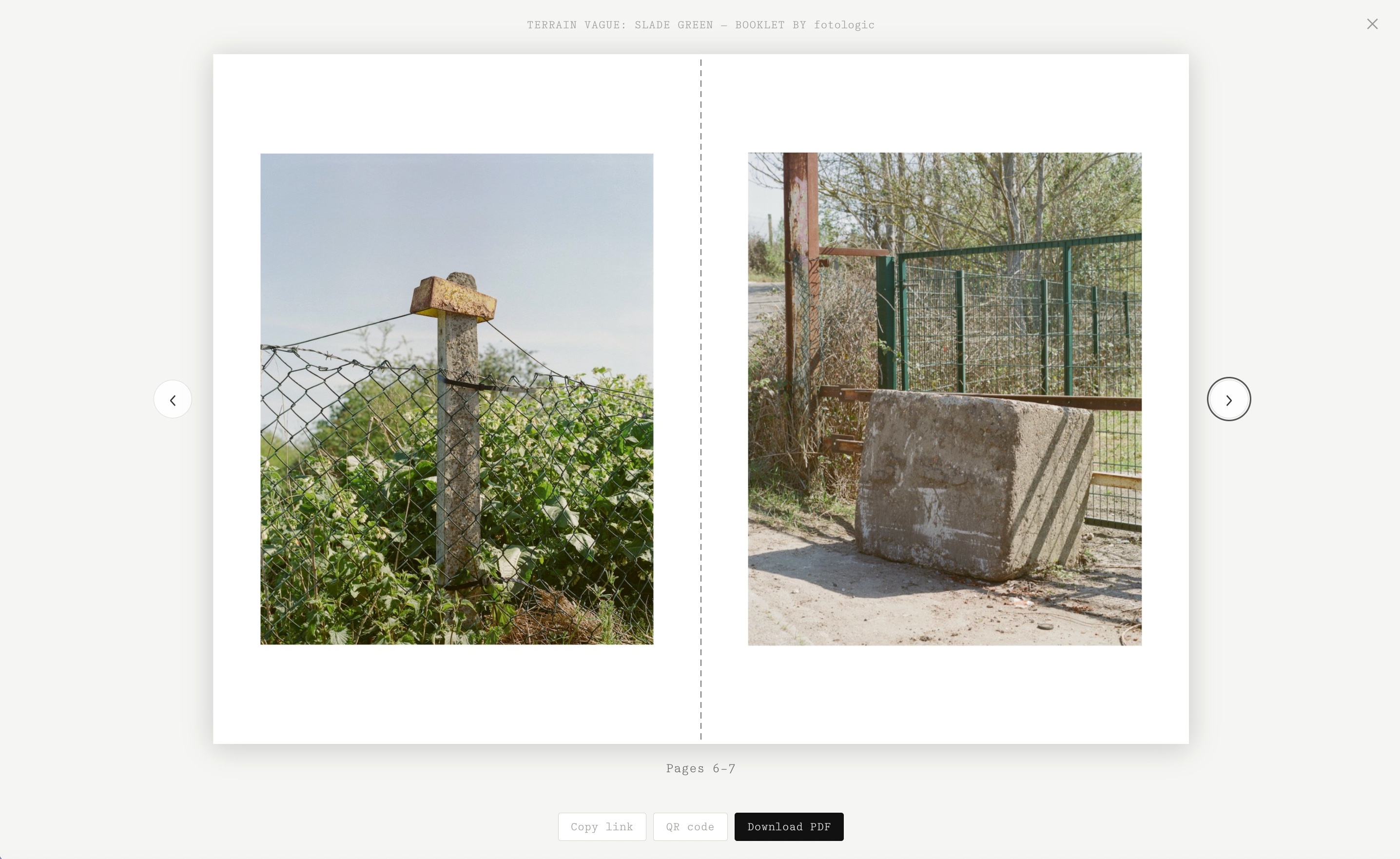
After I’d experimented with making a couple of my own zines and my students had played with the app, I began to think about a different kind of activity. What if another potential barrier was removed? What if we all used someone else’s pictures? Then we could really focus on the impact of editing (choosing) and sequencing (ordering) and we could also compare these choices with one another.
The Library of Congress holds the Farm Security Administration archive: around 175,000 photographs made between 1935 and 1944, now digitised and freely downloadable with no restrictions on use. When I was at university in the early 80s there were about five computers in the library and I didn’t own one of my own until my mid-twenties, and when I did it produced Matrix-style green text on a black screen. No pictures. The idea that a student could now sit down and browse 175,000 high-resolution images from one of the most important documentary photography projects in history, for free, in an afternoon, still strikes me as remarkable. The digitisation of archives like this is one of the genuinely transformative things the Internet has enabled.
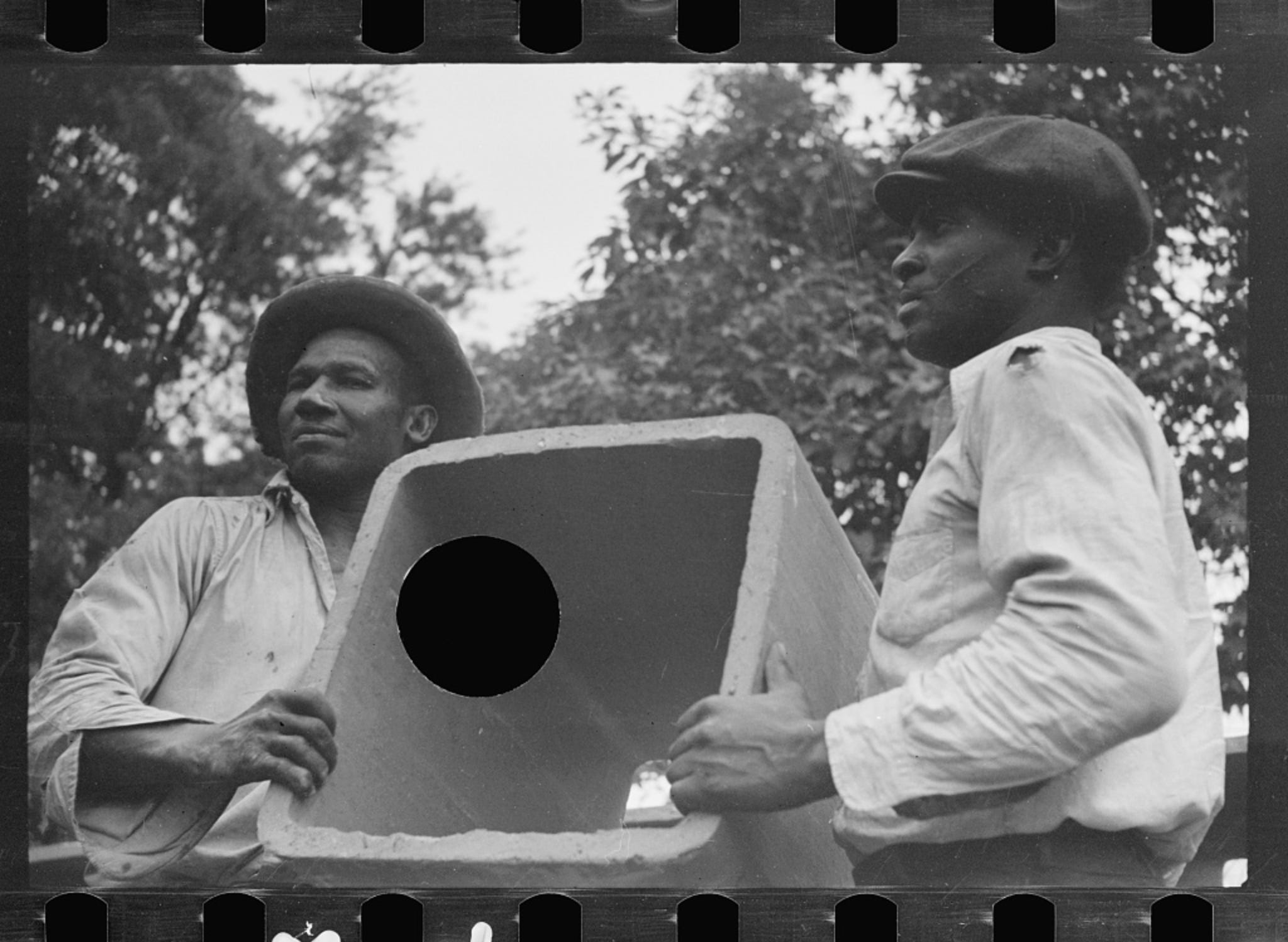
As you probably already know, the FSA project was a New Deal programme set up to document rural poverty during the Depression. It employed a rotating team of photographers and sent them across the country to make the case, in pictures, for federal intervention. The archive that resulted is, among other things, an object lesson in the kinds of decisions I want students to make. The photographers weren’t just recording, they were selecting, framing and arguing. But the project also raises more uncomfortable questions, which makes it even more interesting as a teaching resource. The photographs were produced under editorial control. Roy Stryker, who ran the unit, issued shooting scripts that shaped what photographers looked for. He also “killed” negatives he didn’t want used by punching a hole through them, destroying the image while technically preserving the film. Around 100,000 negatives were killed this way. The archive we have is not straightforwardly the archive that was made. What Stryker released for publication was curated. Thankfully, the punched negatives have been printed and scanned. I’d seen an exhibition about these killed negatives at the Whitechapel in 2018.
Walker Evans was the most truculent member of the FSA unit. He resisted Stryker’s shooting scripts, refused to caption his images as instructed, and was eventually eased out. What he produced is formally unlike most of the archive: slow, frontal, unsparing. His subjects face the camera without performance. He published his FSA work (alongside James Agee’s prose) as Let Us Now Praise Famous Men, insisting the photographs appear without captions.
Gordon Parks arrived in 1942 as the FSA’s first Black photographer. Self-taught, from Kansas, he’d grown up in conditions not entirely unlike those his colleagues had been sent to document. On his first day in Washington he was turned away from shops, restaurants and a cinema. That evening he photographed Ella Watson, a government charwoman, standing in front of an American flag with her mop and broom and called it American Gothic. His editor told him it was too blunt, then sent him to spend weeks with Watson, her family and her neighbourhood.
Dorothea Lange's contribution to the FSA archive is vast and includes what is probably the most reproduced documentary photograph ever made: Migrant Mother, 1936. I've deliberately not used it here. It's too well known to work as a sequencing exercise. The less familiar images in Lange's archive are, for this purpose, more useful. Familiarity can be as much an obstacle as ignorance.


I selected about 20 images from three archives: Lange, Evans and Parks. Together they raise questions about what gets documented, by whom and under whose authority.
I designed an exercise as follows.
Students select one of the three sets of images downloaded from the FSA archives. These have been shuffled into a random order, with no captions and no context beyond the photographer’s name. They select images from this set and sequence them in a zine. No instructions are given about sequencing or hierarchy. They make the decisions. They are allowed to format or process the images in any way they like and add text. They choose a title and decide whether or not to add any historical context. The comparisons and discussions during and afterwards are what counts. Why did you put this one first? What happens when you move that one to the end? Does it matter that these two are on facing pages? How have others selected and sequenced the same set of images? There are no correct answers.
The iterative nature of the making is important. I made about five versions of my own example zine over a couple of days before I was satisfied. The cover changed three times. Images moved around, got cropped differently or were dropped and retrieved. Showing students this process (not just the finished object but the versions that preceded it) makes the point that creativity is recursive rather than linear and that a first draft is a tool for making a second draft. A combination of persistence and small adjustments. This is harder to demonstrate with a single photograph than with a sequence, which is another reason the format is useful.
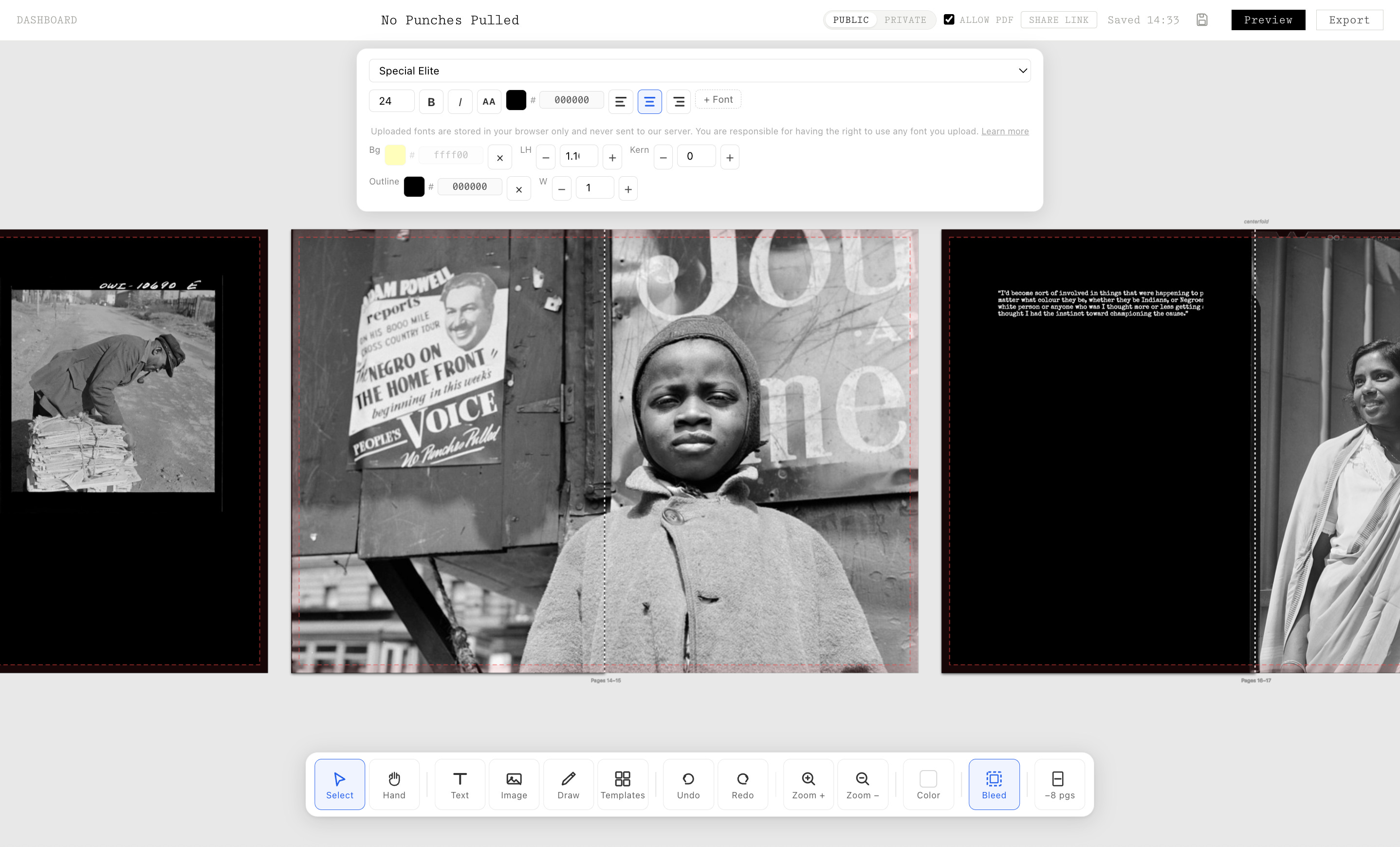
For my own example zine I chose Gordon Parks’ pictures. I wanted to think through the editorial decisions myself before asking students to do the same. The title came from one of the images: a poster visible behind a child’s head, advertising Adam Clayton Powell’s cross-country report in the People’s Voice newspaper. “No Punches Pulled.” It also echoed Stryker’s hole punch. And to Parks himself, who pulled none. These things connect, once you start looking.
Only after I’d finished the zine did I remember that Lewis Bush, who I’d seen briefly in Peckham a few days earlier, has a zine called Stryker, about exactly that practice of destroying negatives. And another called Peckham Gothic. Both sitting in a box in my house. Regular readers will recognise this as the kind of process described in the Walking with Guido series: iterative, coincidence-ridden and arriving somewhere unexpected by a route that only looks inevitable in retrospect.


The argument I want to make to other teachers of photography is that the post-photographic skills of editing, sequencing, contextualising and presenting, which have always been central to what photography actually is, may have been underweighted in teaching because the tools required to practise them have been barriers rather than enablers. That’s changing slowly. The tools are simpler and free. The archives are open.3 And the community of people making interesting things with both is visible and accessible in ways it wasn’t before. Used with some intention, the Internet can be transformative. A 175,000-image public archive. A free booklet-making app built by a photographer in Bavaria during his spare time. It's about staying near the work and noticing what other people are making.4
I’m excited to see what the students make of all this. What I want them to take away from the exercise is not so much a finished zine, although that’s a meaningful outcome and it’s good to have made something you can hold in your hands and share with others. It’s more about the experience of having made an intentional sequence of images that adds up to more than the sum of its parts.
That’s what photographers do. The camera is only part of the story.
These posts will always be free but, if you enjoy reading them, you can support my analogue photography habit, and that of my students, by contributing to the film fund. Thanks to those of you who have already done so. All donations of whatever size are very gratefully received.
He does a brilliant job of explaining the importance of sequencing images, using a set of pictures he took as a young man of his sister leaving home to go to university.
There is, of course, also the issue of establishing a reliable WiFi connection! Not always simples.
Library of Congress (US) — the FSA/OWI collection and much more. Millions of images, no known restrictions on government-commissioned work.
New York Public Library Digital Collections (US) — includes Berenice Abbott’s Changing New York, extensive social documentary photography. Over 180,000 public domain images freely downloadable.
Smithsonian Open Access (US) — 4.7 million items across all Smithsonian institutions, including the National Museum of African American History and Culture. CC0 licence.
Wellcome Collection (UK) — one of the richest archives for social history, medicine, and documentary photography. CC BY 4.0, so attribution required but otherwise free.
Europeana (EU) — a portal aggregating collections from European national libraries, archives, and museums. Filter by “free to reuse.” Huge photographic holdings including 125,000 images from the Europeana Photography project alone.
Rijksmuseum (Netherlands) — high-resolution images released under CC0 since 2013. Known for paintings but has over 9,500 photographs available for direct download.
Deutsche Fotothek (Germany) — the German photographic archive, held in Dresden. Extensive 20th century documentary and press photography.
Flickr Commons (international) — archives and libraries worldwide contribute public domain images through the Commons programme, including the LOC, Smithsonian, National Archives, and dozens of European institutions. Good for browsing across collections.
National Archives (US) — historical photographs including wartime, civil rights, and presidential documentation. Most images in the public domain.
Wikimedia Commons (international) — not an archive in itself but aggregates freely licensed and public domain photography from across the world, including many institutional collections.
Have you requested some CPD time for the APHE conference yet?
Very good post, Jon! I plan on making a couple of zines when I get back home from vacation. I just bought a new printer with this in mind (as well as trying to make very small photo booklets as gifts for my friends). Thinking about photos and making them function as a connection to other people is the only reasonable creative act.
Photogrammar, by Laura Wexler and others, is a great resource for sorting through FSA photos by place and maker: https://photogrammar.org/maps